No pantry, no problem — if you have a bookshelf. A bookshelf pantry is the simplest way to build pantry storage in a rental kitchen without drilling a single hole: take a freestanding shelf unit you already own, or one you pick up secondhand for the price of a takeout dinner, and turn it into a dedicated home for your dry goods. No landlord permission needed, nothing screwed into the walls, and when you move, the whole pantry moves with you.
This is the missing piece of the no-pantry system: instead of scattering cans and boxes across every cabinet, you give food one visible, reachable home. These 9 renter-safe setups cover every kind of shelf — thrifted bookcases, wire racks, closed cabinets, and cubbies — plus the zoning, container, and safety rules that keep a bookshelf pantry from turning into a cluttered shelf of shame.
Pick a unit that actually fits a rental
1. Start with the tape measure, not the thrift store
Measure three things before you buy anything: the wall space where the unit will live, the narrowest doorway or hallway it must pass through on move-in day, and the depth of the shelf. Standard bookcases are about 11 to 12 inches deep, which is perfect for a single row of cans and jars — deep enough to hold real food, shallow enough that nothing hides in a second row. Anything deeper than 14 inches starts to swallow small items, and you will need bins to keep the back row reachable. Also measure your ceiling: a unit that stops at counter height is easier to load, easier to move, and far more stable than a towering one.
2. Choose the right type for your space
A solid-wood thrifted bookcase is the classic bookshelf pantry: sturdy, cheap secondhand, and heavy enough to stay put. A wire shelving unit is the workhorse alternative — adjustable shelves, strong weight capacity, and open sides that let you see everything, though small items can slip through the wires unless you add shelf liners. A baker's rack adds hooks and a work surface on top. And if your kitchen opens into your living space, a closed-door cabinet or armoire hides the whole pantry behind doors, which matters more than you think — open food storage in a studio can make the whole room feel like a grocery aisle.
3. Stability first: heavy low, light high, no tipping risk
Freestanding furniture tips when it is top-heavy, so load canned goods, jars, and appliances on the bottom shelves and keep only light items — cereal boxes, tea, paper goods — up high. Choose a unit that is wider than it is tall whenever you can; a low, wide bookcase is inherently more stable than a tall, narrow one. In homes with small children or large pets, skip tall unanchored units entirely or ask your landlord about an approved anti-tip anchor — do not drill into rental walls on your own, and do not trust adhesive strips to hold a loaded shelf. A stable, low unit that you never have to anchor is the renter-safe answer.
Zone it like a real pantry
4. Give every shelf a job
A bookshelf pantry only works if it has zones, just like a real pantry does. Try this layout: bottom shelf for heavy cans and jars, middle shelves at eye and hand level for everyday cooking — oils, sauces, rice, pasta — and the top shelf for backstock and rarely used items. Keep breakfast together, baking together, and snacks together, so you can grab a whole category in one reach. If your unit is the narrow gap beside the fridge, a slim cart for that gap handles overflow while the bookshelf holds the main stock — the two work as a team, not as rivals.
5. Decant into square, see-through containers
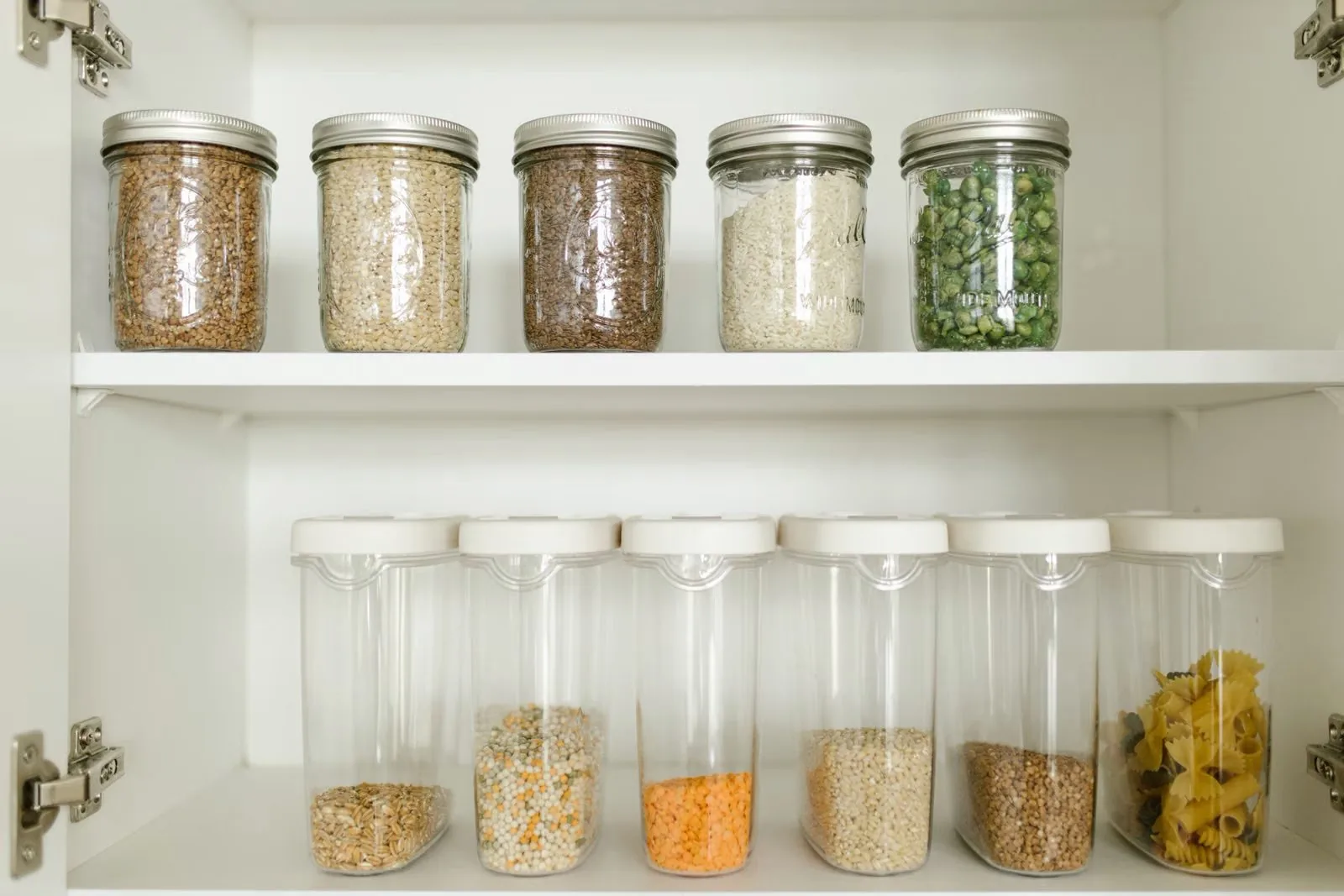
Bookshelf shelves are shallow, so square containers beat round ones — they sit flush, waste no gaps, and stack neatly. Decant flour, sugar, rice, oats, and pasta into clear, lidded containers with labels, and keep one working container per staple on the shelf while backstock lives elsewhere. This is also where the working-stock versus backstock split earns its keep: the bookshelf holds this week's food, and the rest of the haul lives in a closet or on top of the cabinets. Decanting also shows you at a glance what is running low, which ends the classic no-pantry problem of buying a third bag of brown sugar because you could not see the two you already had.
6. Use bins to stop the slide
Open shelves invite drift: one pulled-out jar knocks three others over. Fix it with small bins, one per category — a bin for canned tomatoes, one for beans, one for snacks. Bins turn a shelf into a drawer you can pull out, look into, and slide back. Use the same trick for packets and pouches, which otherwise fall behind everything. Label the front of each bin, not the shelf, so the system survives a rearrangement. And keep a small "use first" bin at eye level for anything opened, near its date, or bought on sale in bulk — it is the cheapest way to stop food waste in a small kitchen.
Make it look intentional, not improvised
7. Hide the chaos with doors, curtains, or matching bins
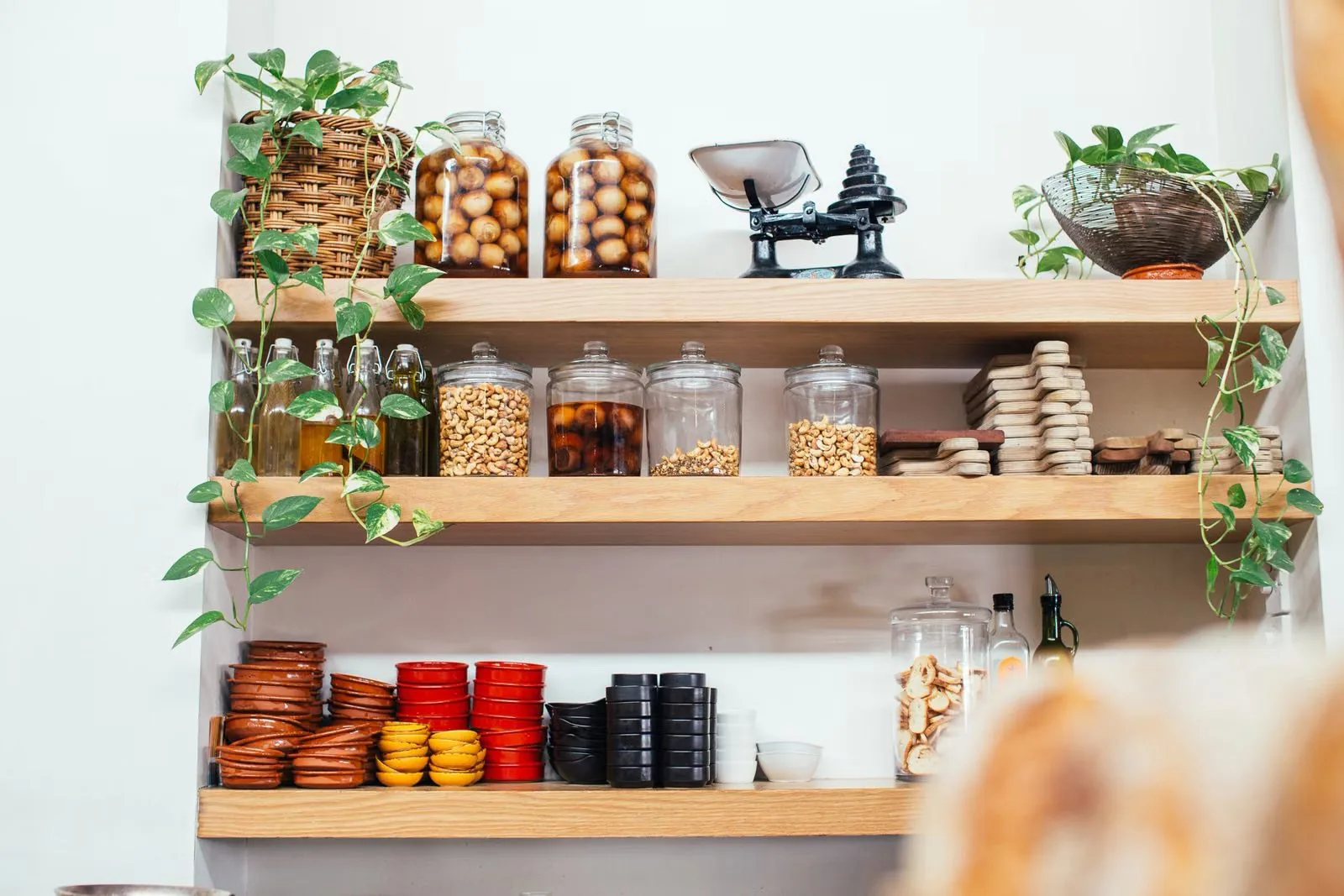
The difference between a pantry and a pile is visual calm. If your unit has no doors, matching bins and containers do the same job: uniform containers on the middle shelves, opaque bins on the bottom shelf, and nothing loose on top. A tension rod with a simple curtain across an open bookcase hides everything in one move and costs almost nothing — and since it is tension-mounted, it leaves no marks. Keep the top of the unit clear or limited to one decorative item; a shelf top crowded with random boxes reads as clutter from across the room, which matters most in a studio where the kitchen is always in view.
8. Protect food from kitchen grease, light, and heat
Open shelving sits in the kitchen's air, so keep the unit away from the stove if you can — cooking grease settles on open jars and containers, and heat shortens the life of oils and spices. Store potatoes and onions separately, in dark, ventilated spots rather than side by side, since onions make potatoes sprout faster. Keep spices in closed containers away from direct sunlight, and wipe shelves down once a month — a damp cloth, two minutes, done. If your only available wall is near the stove, a closed-door cabinet is the better pick: doors are the cheapest grease shield there is.
Put the pantry where the kitchen isn't
9. Borrow space from the next room
When the kitchen has no spare wall at all, the bookshelf pantry moves one room over — a hallway nook, the end of a bedroom wall, or a dining corner. This works as long as you follow one rule: everyday cooking items stay in the kitchen, and the borrowed shelf holds backstock, baking supplies, and snacks. The moment you have to leave the kitchen for salt mid-recipe, the system has failed. A small basket or tote by the stove holding the week's essentials bridges the gap: refill it from the bookshelf pantry once a week, and the distance never costs you a meal. Before you commit to any unit, run a quick declutter pass first — the shelf you already own may already hold the space you need.
The $30 bookshelf pantry starter kit
A secondhand bookcase or wire unit ($0–$20 from a thrift store, marketplace, or your own spare room), a set of square clear containers with lids (~$10 for a starter set), and a few small bins for cans and packets. That is the whole investment. Everything else — labels, shelf liner, a tension-rod curtain — is optional polish you can add later, one piece at a time.
📌 Pin this for later
No Pantry? Turn a Bookshelf Into a Pantry — save it to your "Pantry Ideas for Tiny Kitchens" board.
Frequently asked questions
Can I really use a bookshelf as a pantry in a rental?
Yes — that is exactly what makes it renter-friendly. A freestanding bookshelf needs no drilling, no wall anchors, and no landlord permission, and it moves with you to your next apartment. Just load heavy items low, keep the unit stable, and protect the floor underneath with felt pads if it will sit on hard flooring.
How deep should a bookshelf pantry be?
About 11 to 12 inches is ideal: deep enough for a row of cans and jars, shallow enough that nothing hides behind a second row. If your shelf is deeper, use bins pulled out like drawers so the back row stays reachable.
How do I keep an open bookshelf pantry from looking messy?
Use matching bins and clear containers, give every shelf one category, and hide the bottom shelf behind opaque bins. A tension-rod curtain across the front hides everything at once, and keeping the top of the unit clear makes the whole thing read as furniture instead of clutter.
What should I not store on an open bookshelf pantry?
Keep it away from stove heat and direct sunlight, which degrade oils and spices. Store potatoes and onions separately in dark, ventilated spots, and keep anything that attracts pests — open flour, sugar, cereal — in sealed containers rather than open bags.
What if I have no wall space in the kitchen at all?
Put the bookshelf pantry in the next room — a hallway, dining corner, or bedroom wall — and keep a small tote of the week's essentials in the kitchen itself. Everyday cooking items stay within reach; the bookshelf holds backstock, baking supplies, and snacks.