No pantry is the defining feature of the small rental kitchen. Where do the rice, the cans, the snacks, the baking supplies go when there's no pantry? Everywhere and nowhere — which is why your counters look like a grocery store exploded.
Here's the mindset shift: you don't need a pantry room. You need a pantry system — a dedicated zone that functions exactly like one. These 14 ideas build that system without drilling, renovating, or spending much.
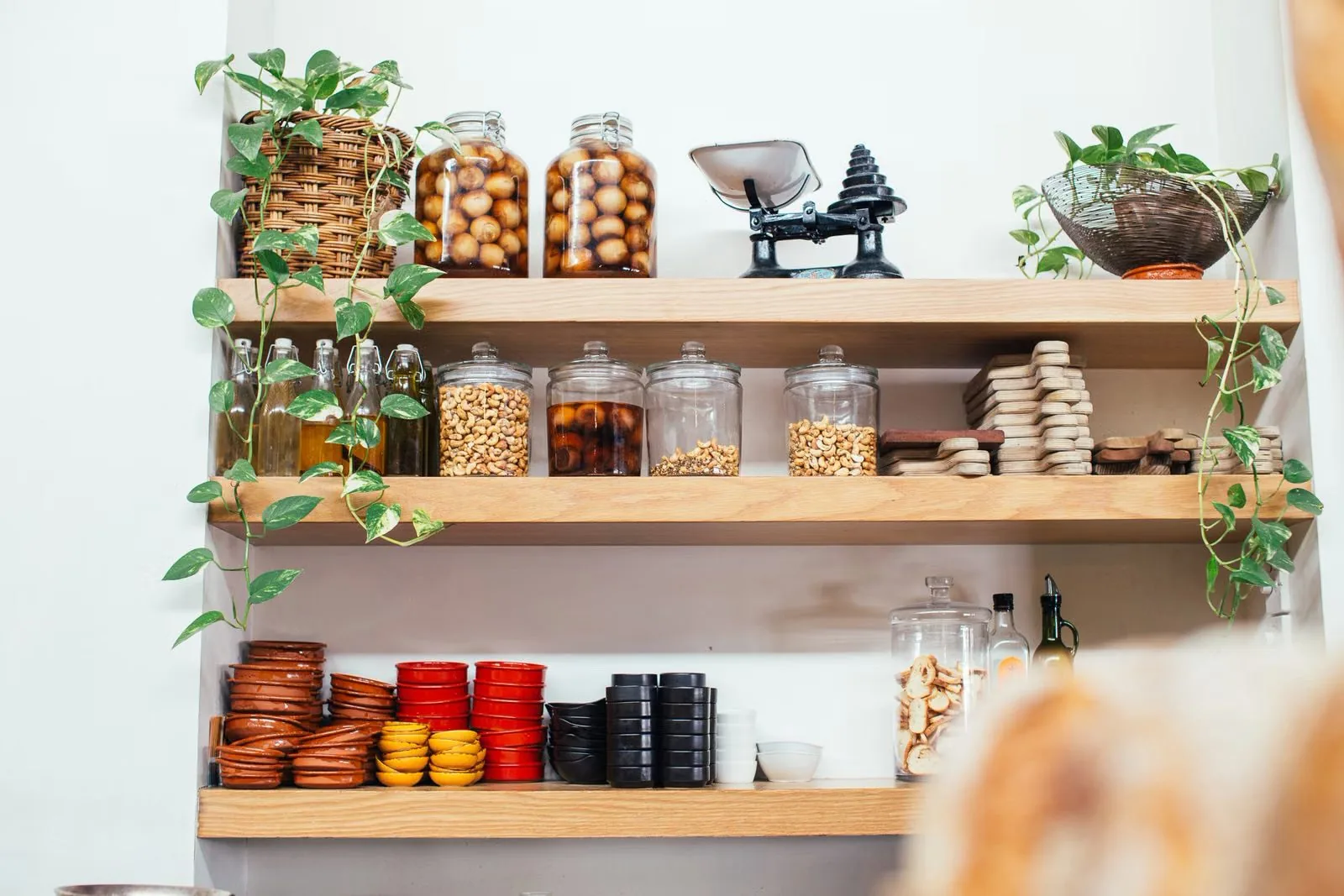
The rolling-cart pantry
1. Dedicate a 3-tier cart
The fastest no-pantry fix: a slim rolling cart becomes your pantry on wheels. Assign tiers by category — top for breakfast, middle for snacks, bottom for baking — and park it in any dead corner or beside the fridge. Label each tier so the system survives real life.
2. Use a bookshelf as a pantry
A narrow bookshelf (even a $30 one) against any free wall works beautifully as open pantry shelving. Line it with matching baskets or clear containers and it looks intentional — like a styled pantry wall, not a storage compromise.
Steal a cabinet and make it work harder
3. Convert one cabinet into "the pantry"
Pick the cabinet closest to your prep area and declare it the pantry. Then double its capacity: add a shelf riser, slide under-shelf baskets onto the existing shelf, and put a turntable in the back corner. One ordinary cabinet now holds what two used to.
4. Over-the-door pantry rack
If your kitchen has any full-height door — a broom closet, a utility door — an over-the-door rack with deep baskets becomes instant pantry shelving for cans, jars, and boxes. No screws, no damage.
Decant everything
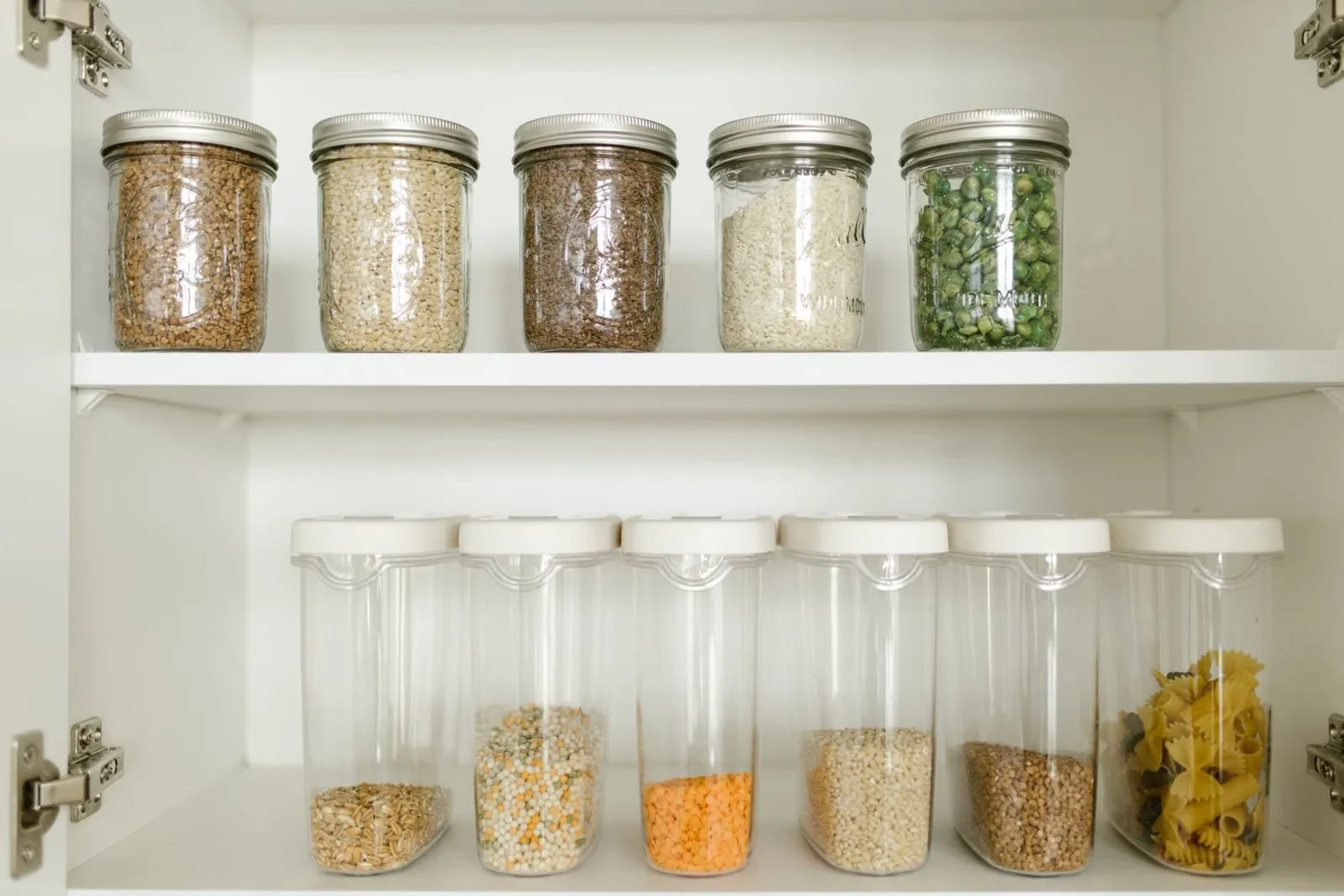
5. Uniform clear containers
This is the highest-impact visual and practical change. Half-empty bags and mismatched boxes waste shocking amounts of space. Decanting dry goods into uniform square containers lets you stack floor-to-ceiling, see exactly what you have, and fit 20–30% more in the same cabinet.
Start with just five: flour, sugar, rice, pasta, and cereal. Buy the containers once; they move with you forever.
6. Label everything
Labels aren't just cute — they're how a pantry system survives other humans. A $10 label maker (or even masking tape and a marker) means your roommate puts the rice back in the rice container. Future you will be grateful.
Use forgotten spaces
7. Above the fridge
The cabinet above the fridge is deep, high, and usually full of junk. Clear it, add a shelf riser, and store backstock there — the extra olive oil, the bulk paper towels. Keep a small folding step stool nearby so it's actually accessible.
8. The tops of cabinets
Upper cabinets rarely reach the ceiling in rentals. That gap fits attractive baskets holding backstock and rarely-used appliances. It keeps the "pantry overflow" off your counters.
9. Under-bed or closet overflow (yes, really)
Bulk buys — the 12-pack of paper towels, the Costco olive oil — don't need to live in the kitchen. A labeled bin in a nearby closet holds overflow. Your kitchen keeps only what you use weekly.
Make small spaces pull their weight
10. Magnetic containers on the fridge side
Magnetic spice tins and small magnetic baskets stick right to the fridge's side panel — perfect for the teas, packets, and small jars that otherwise colonize the counter.
11. Hanging basket from a tension rod
Wedge a tension rod inside a deep cabinet or under upper cabinets and hang S-hooks with small baskets for onions, garlic, and fruit. It frees a full shelf and keeps produce visible (so it actually gets eaten).
12. Door-mounted wrap organizers
Foil, plastic wrap, and parchment boxes are long and awkward. A door-mounted rack sized for them, stuck with strong adhesive or hung over the door, gets them out of drawers entirely.
Keep the system alive
13. The weekly 5-minute reset
Pantry systems die from drift, not disaster. Once a week, spend five minutes putting strays back and tossing anything expired. Set a phone reminder for Sunday evening — it becomes automatic within a month.
14. Shop from your "pantry" first
Before writing a grocery list, scan your pantry zone. Clear containers make this a 30-second job, and it stops the duplicate-buying that clogs small kitchens. Less coming in means less to store — the cheapest storage hack of all.
The $30 pantry starter kit
If the full system feels overwhelming, start here — the minimum viable pantry for under $30: one 3-tier rolling cart (~$20 on sale), five uniform containers for your most-bought dry goods (~$10 for a basic set), and masking tape plus a marker for labels (pennies). That's it. This tiny kit handles 80% of no-pantry life, and you can add the risers, turntables, and door racks later as you learn your habits.
📌 Pin this for later
14 Ways to Create Pantry Storage With No Pantry — save it to your "Apartment Kitchen Ideas" board.
Frequently asked questions
How do I store food in a kitchen with no pantry and tiny cabinets?
Build a pantry zone: a rolling cart or bookshelf for bulk storage, one cabinet maximized with risers and turntables, and clear stackable containers everywhere. Overflow (bulk paper goods) can live in a nearby closet bin.
Are clear containers worth it for a rental kitchen?
Yes — they're the single best space investment. Uniform containers stack efficiently, keep food fresher, and let you see inventory at a glance, which reduces duplicate buying. They also move with you to the next apartment.
Where should I put bulk items if my kitchen is tiny?
Keep a week's worth in the kitchen and store the rest in a labeled bin in a nearby closet or under the bed. Your kitchen should hold what you use weekly — not a warehouse.