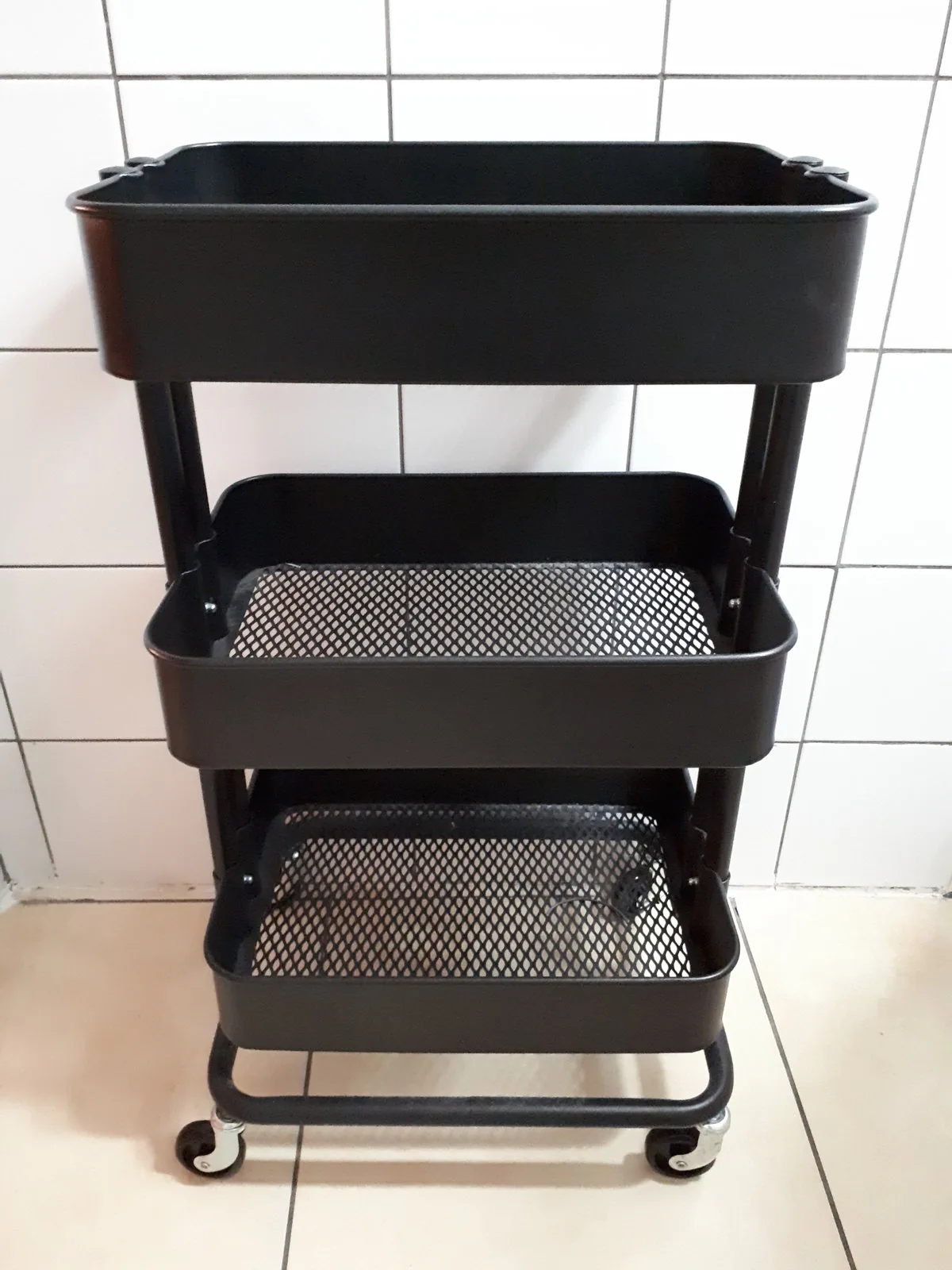
A slim storage cart for a small kitchen turns the dead gap beside your fridge, stove, or washing machine into a real pantry shelf. In most rentals that gap is 5 to 10 inches wide, too narrow for a cabinet and too useful to waste on dust and dropped bottle caps. A narrow rolling cart slides into that sliver, holds the bottles, cans, and wraps that crowd your counters, and rolls out only when you need it — no drilling, no installation, and no floor space lost.
This guide is specifically about slim and skinny carts for gaps. It is different from a standard 3-tier utility cart: the sizing, loading, and safety rules change completely when the cart is only a few inches wide. If you already use a regular cart as a pantry, think of a slim cart as its overflow partner for the items you reach for every day while cooking.
Start by measuring the gap properly
Most slim-cart returns happen because the gap was measured once, at eye level. Rental floors are rarely level and baseboards, trim, and appliance doors all steal space. Measure in three places before you buy anything.
- Width at the baseboard: trim is usually the tightest point. Measure floor level first, then at counter height, and buy for the smaller number.
- Depth front to back: most fridge gaps are 20 to 24 inches deep. A cart much shorter than that wastes space; a cart longer than that will stick out into the walkway.
- Clearance to open doors: check that the fridge door, oven door, and nearby cabinet doors can still open fully with the cart in place.
- Floor transition: note any raised strip, uneven tile, or rug edge the small wheels will have to cross every time you pull the cart out.
Choose the right slim cart for a rental
Width: match the cart family to the gap
- Under 6 inches: single-column slide-out towers for oils, vinegars, and spice jars. Capacity is small, so reserve it for tall, thin bottles.
- 6 to 8 inches: the most useful rental size. Holds standard cans in a single row, wrap boxes on end, and cleaning spray bottles.
- 8 to 10 inches: a true slim pantry cart. Fits small jars two across in some models and works beside the fridge or at the end of a counter run.
Height and tiers
Tall, narrow carts with five to seven short tiers suit pantry overflow because they use vertical space the gap already offers. Shorter three- or four-tier carts suit the stove side, where you want oils and utensils below counter height and away from heat. Count the tier height, not just the tier number: canned goods need about 5 inches, oil bottles need 9 to 11 inches, and wrap boxes need the full length of the cart.
Material and wheels
Powder-coated metal and sturdy plastic both work in a kitchen gap. Avoid bare wood right beside a stove or sink where splashes are constant. Small hard casters roll best on tile and vinyl; softer wheels are quieter on wood but can stick on uneven rental floors. Whatever you choose, test the roll empty and loaded before you commit to a layout.
What actually fits in a slim cart (and what does not)
A slim cart rewards single-file storage. Everything is visible in one row, nothing hides behind anything else, and that is exactly why it works so well for daily cooking items.
- Best fits: cooking oils and vinegars, soy sauce and hot sauce, spice jars, canned goods in a single row, foil, parchment and wrap boxes stored upright, dish soap and spare sponges, reusable bottles.
- Good fits with limits: small jars of jam or mustard, packets and stock cubes in a small bin, pet treats, vitamins that stay cool and dry away from the stove.
- Poor fits: bulky cereal boxes, wide mixing bowls, heavy cast iron, large flour bags, and anything you need with two hands while the cart is half out of the gap.
Load heavy items low, tall bottles in the middle tiers where guard rails are highest, and light wraps and packets at the top. That order keeps the cart stable and stops the top-heavy wobble that makes narrow carts tip when a wheel catches.
For a fuller pantry system around the cart, see the guide to building storage with no pantry in a rental kitchen, which covers carts, cabinets, and overflow zones together.
Four gap placements beyond the fridge side
1. Between the stove and the counter or wall
Use this gap only for heat-safe items: oils you cook with daily, salt, and utensils in a crock on a wider cart. Keep wraps, plastic, and cleaning chemicals away from burners, and never block oven ventilation or the oven door swing.
2. Between the fridge and a doorway
This is prime slim pantry territory because it stays cool and dry. Load it as a single-row pantry for cans and bottles, and pair it with the fridge-side system in the small fridge organization guide so fresh and dry goods stay in one corner of the kitchen.
3. At the end of a counter run
Many galley rentals end with a 7- to 9-inch stub of unused floor before a wall or door frame. A slim cart there becomes an end-cap spice and oil station. If spices are your main overflow, compare this setup with the dedicated systems for organizing spices in a tiny rental kitchen and pick the one closer to where you actually cook.
4. Beside the washer or in a laundry nook off the kitchen
Backstock does not need prime kitchen space. A second slim cart outside the kitchen can hold duplicate cans, paper goods, and cleaning refills, while the kitchen cart holds only the current bottle or box in use.
Slim cart vs. a regular rolling cart
A regular three-tier cart is a movable island: it holds a coffee station, a microwave, or a full breakfast tier, and it needs a parking spot. A slim cart is fixed-gap storage that happens to roll: it holds one row of items and needs no parking spot at all. Most small rentals benefit from one of each, doing different jobs.
If you are choosing your first cart, start with the wider guide to rolling cart ideas for small kitchens, which covers sizing for standard carts. Add a slim cart second, once you know which gap is still wasted and which category still has no home.
Keep the gap clean and renter-safe
Gap storage has one honest downside: crumbs and dust collect behind a cart that rarely moves. Pull the cart out fully once a month, sweep the gap, and wipe the wheels. Check for drips from oil bottles, which make small casters skid. No part of this setup touches walls, cabinets, or flooring permanently, so it leaves nothing to repair at move-out — just roll the cart out and take it with you.
Keep the walkway rule in mind too. A slim cart should sit flush inside its gap, never half-parked in the walking path. If guests, kids, or pets regularly knock it, move daily items to the back half of each tier and keep the front edge light.
📌 Pin this for later
Slim Storage Cart Ideas for Small Kitchen Gaps — save it to your "Apartment Kitchen Ideas" board.
Frequently asked questions
What size slim cart fits beside a fridge?
Measure the gap at baseboard level first. Most fridge gaps are 5 to 10 inches wide. Choose a cart at least half an inch narrower than the tightest measurement, and check the depth (usually 20 to 24 inches) and door clearance before buying.
What should I store in a narrow rolling pantry cart?
Single-row items work best: oils, vinegars, sauces, spice jars, cans, and wrap boxes stored upright. Keep heavy items on the lowest tier, tall bottles in the middle, and light packets at the top for stability.
Is a slim cart better than a regular rolling cart?
They do different jobs. A slim cart fills a wasted gap and needs no parking space. A regular cart works as a movable pantry, coffee station, or prep surface. Many small kitchens use one of each.
Can I put a slim cart next to the stove?
Yes, with limits. Store only heat-safe cooking oils, salt, and utensils there. Keep plastic wrap, chemicals, and paper away from burners, and never block the oven door or ventilation.
Will a slim cart damage rental floors?
No, if the casters are clean and suited to your floor. Wipe the wheels monthly, avoid dragging a loaded cart sideways, and lift it over raised thresholds instead of forcing the wheels across.