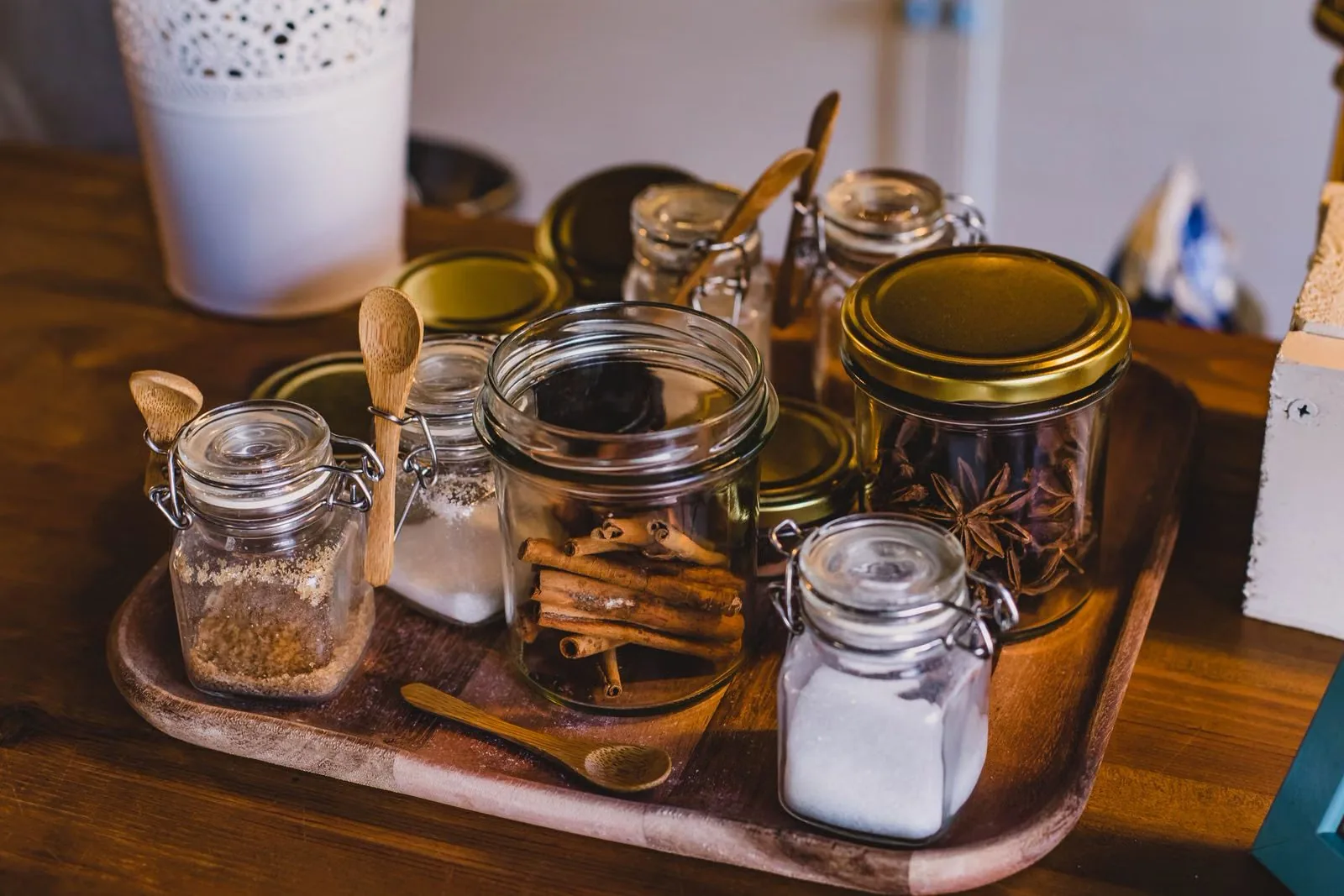
Twenty spice jars. No spice rack. One chaotic cabinet where the paprika is always behind the cumin, and you're pretty sure you own turmeric twice. Spices are the perfect example of small-kitchen entropy: tiny items, bought one at a time, with no system.
The good news: spices are also one of the easiest things to organize in a rental — no drilling needed, and every method below costs under $20. Pick the one that matches your space.
First: the great spice purge
Before organizing, check dates. Ground spices lose their punch after about a year; whole spices last longer. Sniff test: if it smells like nothing, it is nothing — toss it. You'll be shocked how many jars leave. (I once threw out 11.) Decant survivors into uniform jars only if you enjoy that aesthetic; it's optional, not required.
The 7 renter-friendly methods
1. Tiered shelf insert (the easiest win)
A small 3-tier stepped insert sits inside any cabinet or on the counter and puts every jar on display. No installation, moves with you, costs around $12. This alone solves spice chaos for most people.
2. Magnetic tins on the fridge side
Small magnetic tins stick directly to the side of your refrigerator — a spice rack that uses zero cabinet and zero counter space. Buy tins with clear lids or add labels. This is my personal favorite for truly tiny kitchens.
3. Adhesive spice rack on the wall or cabinet side
Slim adhesive-backed racks mount on any smooth surface — the side of a cabinet, a tile backsplash, inside a pantry door. They hold standard spice jars and peel off cleanly at move-out.
4. In-drawer inserts
If you have one shallow drawer to spare, lay jars on their sides in a drawer insert with angled slots. Labels face up, everything visible at a glance, and the drawer still closes. Deeply satisfying.
5. Over-the-door slim rack
Narrow over-door racks designed for spice jars hang inside a cabinet or pantry door. Twenty jars move out of the cabinet entirely. Just measure jar height against the rack's shelf clearance first.
6. Turntable for deep cabinets
Deep cabinet where spices vanish into the void? A small turntable (lazy Susan) ends the archaeological digs. Spin, grab, done. Combine with a tiered insert on the turntable for maximum visibility.
7. The "daily seven" system
Here's the minimalist move: keep only the 7 spices you use weekly in prime real estate (a tiny rack by the stove), and store the rest together in one labeled bin elsewhere. Most cooking uses the same handful of spices — stop giving rare ones premium space.
Labeling: the 10-minute upgrade
Whatever method you choose, label the tops of jars, not just the sides — because you'll usually be looking down at them. A label maker is $10 and makes everything look (and work) twice as good. Include the purchase date so you know when to refresh.
5 spice storage mistakes renters make
1. Keeping them next to the stove. Heat and steam kill flavor fast. That cute spice rack above the stove is slowly ruining your spices. Store them in a cool cabinet or on the fridge side instead — convenience isn't worth dead flavor.
2. Buying the giant warehouse jars. That enormous paprika seems like a deal until it's taking up prime space for three years. Buy small unless you cook with it weekly.
3. No labels, or labels only on the side. You're usually looking down at spices. Label the tops. Future-you, mid-recipe with messy hands, will be grateful.
4. Alphabetical overkill. Organize by use, not the alphabet: daily spices front and center, baking spices together, rare ones in the back. Your cooking has zones; your spices should too.
5. Storing duplicates. The purge exists for a reason. Two half-empty cinnamons become one full jar. Fewer jars means every remaining jar gets better placement.
Building your spice collection from scratch
New kitchen, empty cabinet? Don't buy a 30-jar set — most of it will expire untouched. Start with the "daily seven" for your cooking style (for most people: salt, pepper, garlic powder, cumin, paprika, oregano or basil, and chili flakes), then add one new spice per month for a specific recipe. A small, used collection beats a large, dusty one every time.
📌 Pin this for later
7 Renter-Friendly Ways to Organize Spices — save it to your "Small Kitchen Organization" board.
Frequently asked questions
How do you store spices in a small kitchen with no space?
Use vertical or hidden space: magnetic tins on the fridge side, an adhesive rack on a wall or cabinet side, or a slim over-door rack. All are renter-friendly and use zero counter or cabinet space.
Should I decant spices into matching jars?
It's nice but optional. Uniform jars look great and stack well, but the real win is visibility and labeling. If your current jars are fine, just organize and label them — save the money.
How long do ground spices last?
About a year for full flavor, though they're safe longer. Do a sniff test annually: no aroma means no flavor. Write the purchase date on the label so you know when to refresh.
Where should spices NOT be stored?
Not above the stove (heat and steam destroy flavor), not in damp spots, and not in direct sunlight. The ideal home is a cool, dark cabinet or drawer — which is exactly why the magnetic-tin-on-the-fridge and in-drawer methods work so well.
How many spices does a beginner actually need?
Start with seven that match your cooking: salt, pepper, garlic powder, cumin, paprika, one herb (oregano or basil), and chili flakes. Add new ones only for specific recipes. A small collection you actually use beats a 30-jar set gathering dust.