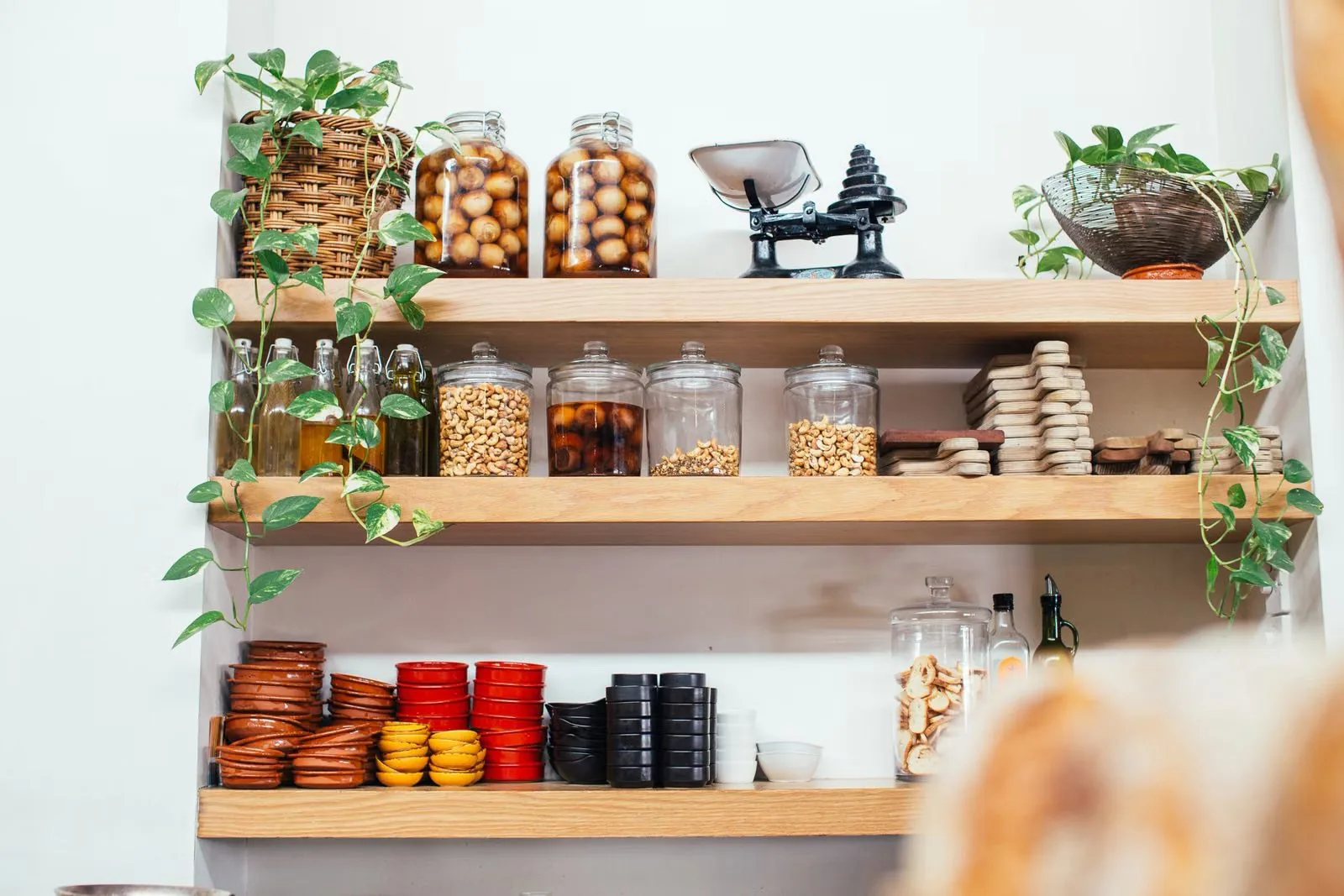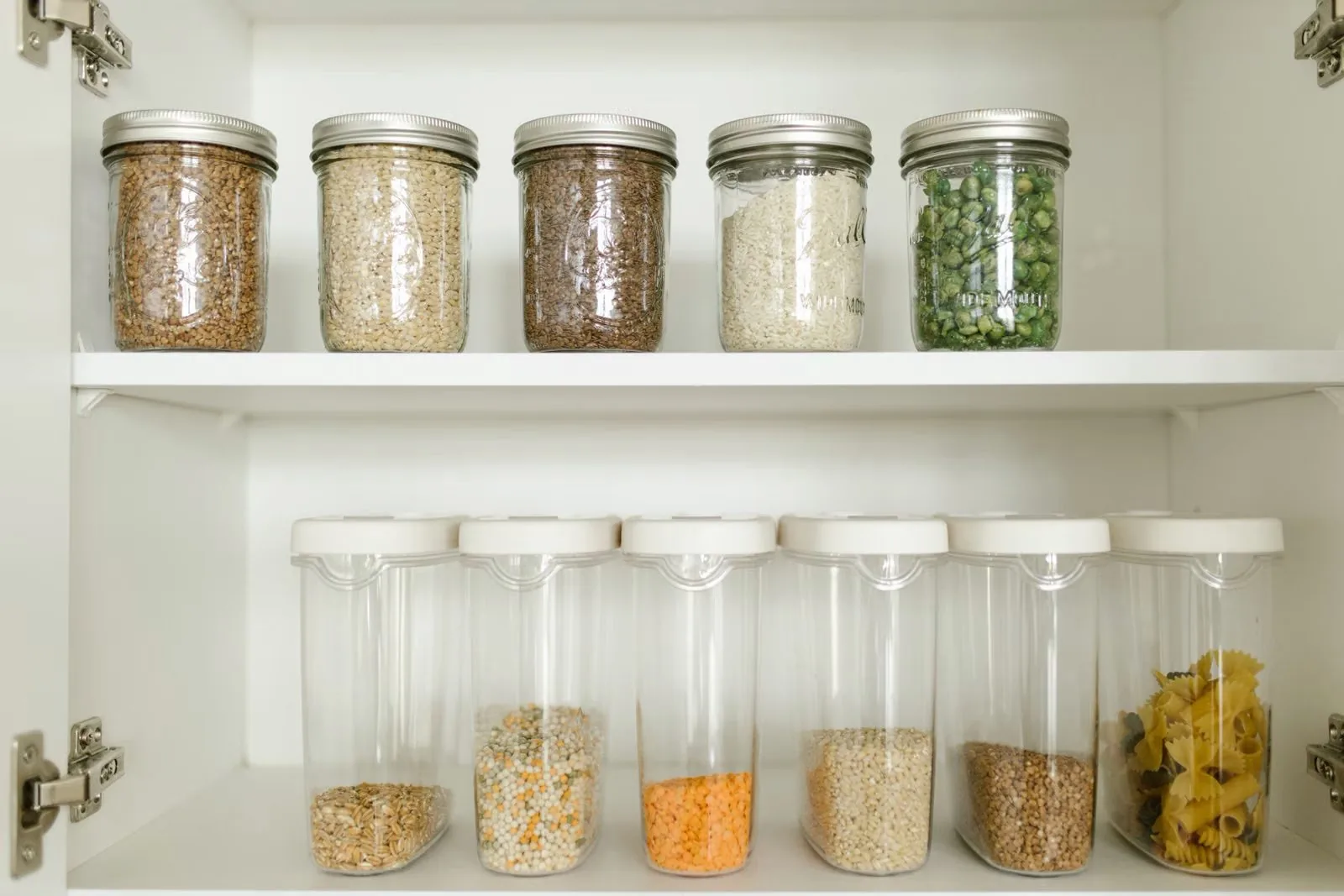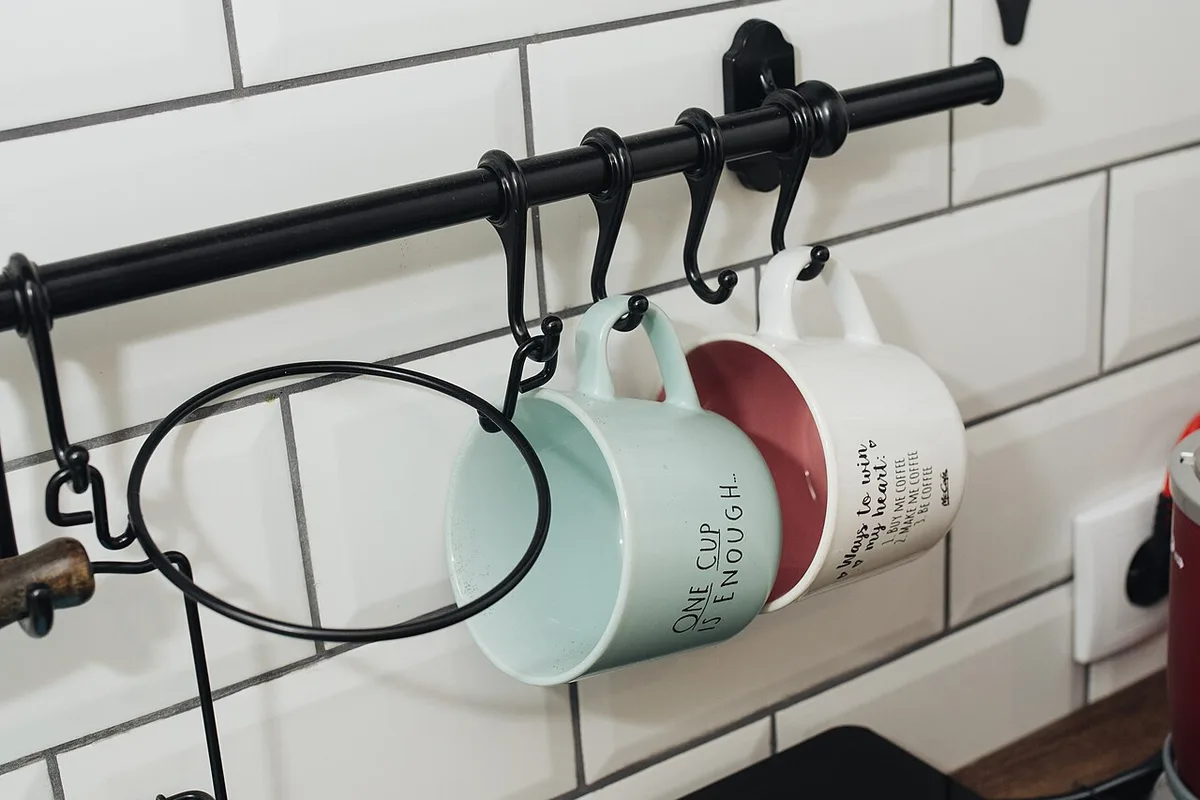
Figuring out how to store mugs and glasses in a small rental kitchen is a space puzzle with a twist: mugs are heavy and have handles that catch on everything, glasses are fragile and top-heavy, and both multiply faster than any other item in the cabinet.
The good news is that mugs and glasses do not need a bigger kitchen — they need a different geometry. Mugs store best hanging, glasses store best upright with room to breathe, and tall tumblers need a shelf of their own. Every method in this guide is renter-safe: no drilling, no screws, no permanent changes.
Start with the count: how many mugs and glasses do you actually use?
Before you buy a hook or a rack, empty the mug and glass shelves onto the counter and count. Most households use the same three or four mugs every day and the same four or five glasses, while the rest sit untouched for months — the souvenir mugs, the promotional glasses, the set someone gave you that you never liked.
A realistic cap for two people is six mugs and eight glasses: four everyday glasses, two tall tumblers, and two stemmed glasses if you use them. Add two per extra person. Anything beyond the cap gets donated or passed on. Measure your shelf height too — write it down, because it decides which solutions will fit, especially for tall tumblers. While you sort, check every piece for chips and cracks, and retire anything chipped before it cuts someone or fails full of hot tea.
Under-shelf mug hooks: the best renter-safe mug storage
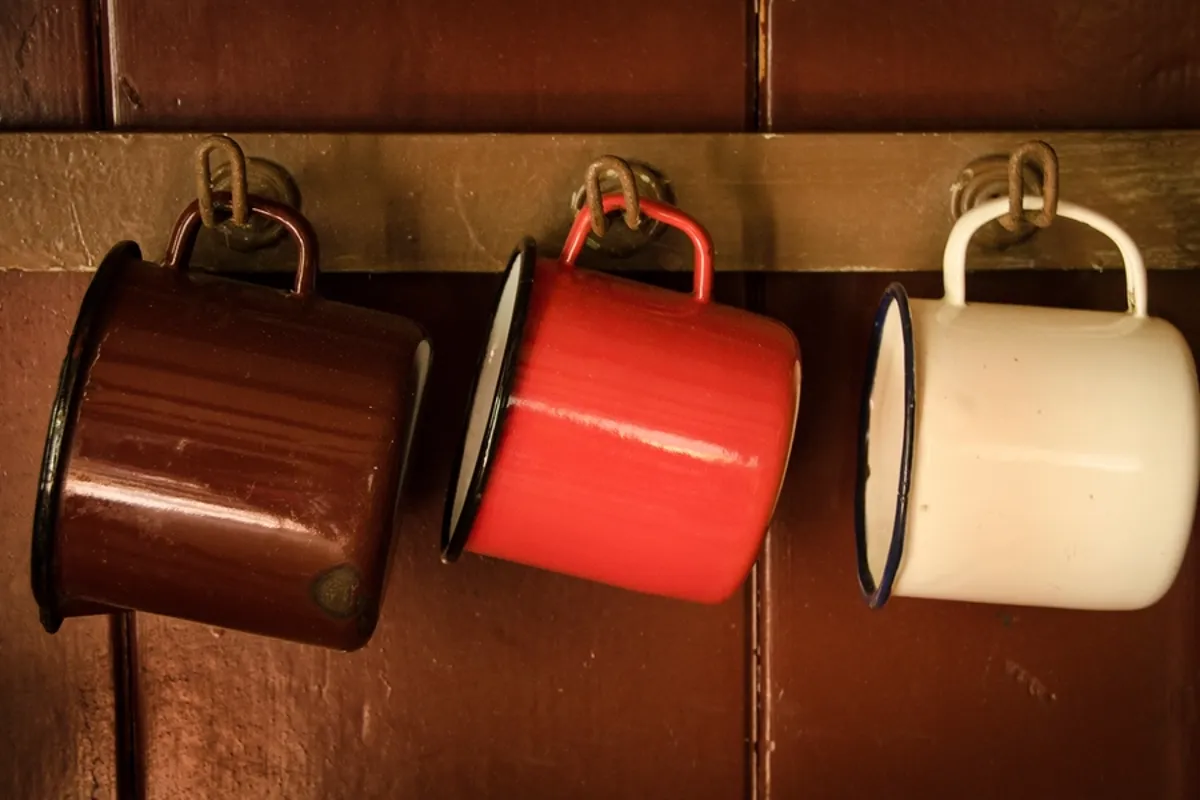
Under-shelf mug hooks are the single best use of space in a small kitchen, because they use the empty air under a shelf that would otherwise hold nothing. A hook rack slides onto the shelf above, so your mugs hang by their handles in the gap between shelves, leaving the shelf surface free for glasses or plates. No screws, no drilling, no adhesive — the rack grips the shelf by its own weight and comes off in seconds.
Buy a rack that matches your shelf thickness — rental shelves are often thinner than standard — and check the fit before you load it: a wobbling rack will slide when you pull a mug off. Hang mugs by the handle with the opening facing out, and leave a finger-width of space between them — mugs hung too close together clink every time the cabinet door closes, and that clinking is how handles chip. If you are also setting up a morning coffee corner, the renter-friendly coffee station guide shows how to keep the mugs you reach for next to the machine.
Slide-on stemware racks: hang glasses upside down, no screws needed
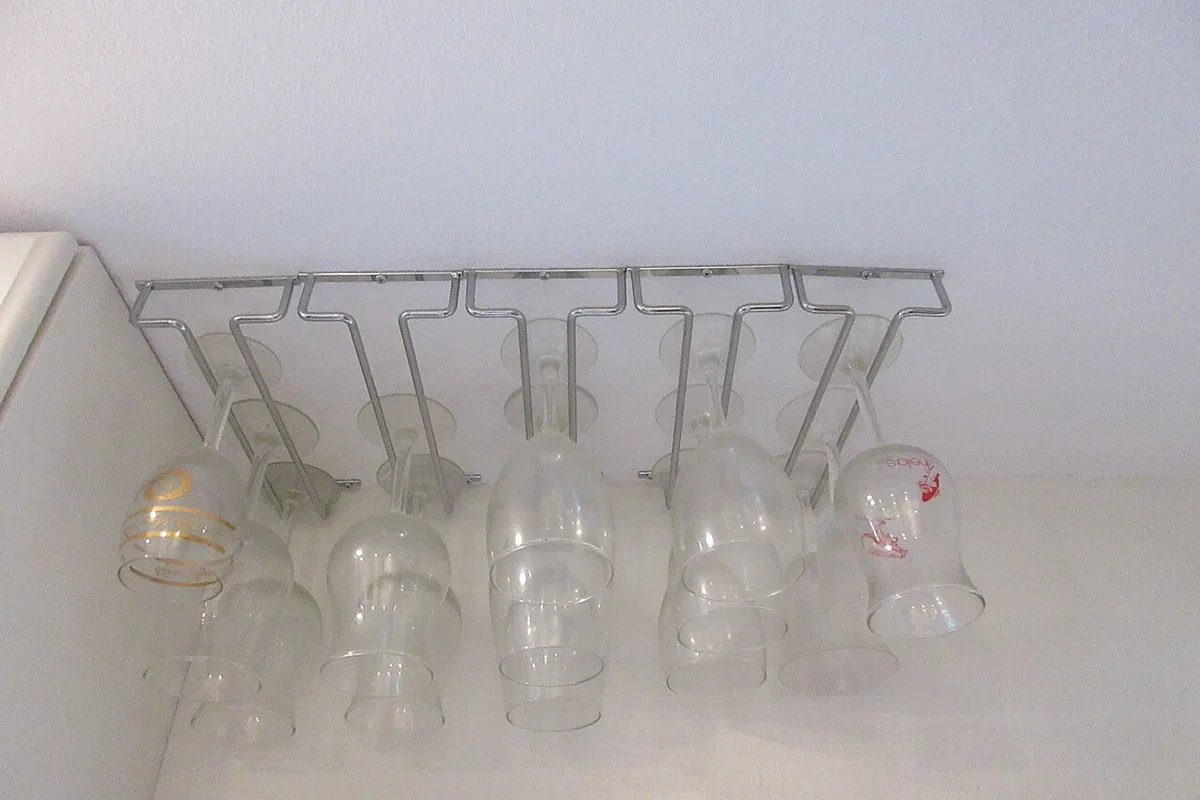
Wine glasses and stemmed glasses are the hardest shape to store, because the stem makes them tall and the bowl makes them wide, and standing them upright wastes a whole shelf on a handful of glasses. The renter-safe answer is a slide-on stemware rack: a slotted rail that slides onto the underside of a shelf, and the stems slide into the slots so the glasses hang upside down. Hung upside down, dust cannot settle in the bowl, the rim never touches a shelf surface, and the glasses cannot tip over.
Choose a rack with slots wide enough for your stems but narrow enough that the bowl cannot slip through. Test with one glass before you load the whole rack, sliding it in from the open end of the slot. Do not hang heavy tumblers from a stemware rack — it is built for the weight of a wine glass, and overloading it will bend the rail. Keep it to stemware only, four to six glasses per rail. The deep kitchen cabinets guide explains how shelf height changes what fits where.
Shelf risers for short glasses: double the shelf without drilling
A shelf riser is a small platform that sits on a shelf and creates a second level above it, and it is the cheapest way to double the storage on a single shelf. Short glasses — juice glasses, small tumblers, espresso cups — go on the riser, and taller glasses or mugs go underneath it.
Measure before you buy: the riser must be shorter than the gap between your shelves, with room to lift a glass off the top level without banging it on the shelf above. Pick a solid top rather than wire slats, because narrow glass bases can tip on wire. Use the riser for the glasses you reach for least often — the ones you grab every morning should stay on the main shelf surface at the front. Only stack glasses designed to stack, and never force a stuck pair apart by twisting; run warm water over the outer glass and the inner one will loosen on its own. The baking sheets and cutting boards guide uses the same vertical-filing idea to free up shelf space.
Mug tree vs. cabinet space: the countertop trade-off
A mug tree — a stand with hooks around a central pole — keeps four to six mugs on the counter, always within reach. The trade-off is counter space, and in a small rental kitchen counter space is the scarcest resource of all. A mug tree takes up roughly the footprint of a dinner plate, which is the same space as a cutting board or a coffee machine. Before you buy one, ask whether the mugs it holds are the ones you reach for every day, and whether the counter space is worth more than the cabinet space it saves.
A mug tree works best when the cabinet is truly full and the mugs on it are your daily rotation — put it next to the kettle or coffee machine, so the mug travels the shortest distance from hook to cup. Keep it to the mugs you use daily; the tree should never become a display for souvenir mugs, because those belong in a box, not on the counter. If the counter is already crowded, skip the tree and use under-shelf hooks instead — hooks cost no counter space at all. If your kitchen also needs a regular clear-out, the small kitchen declutter checklist is a good place to start.
The tall-tumbler problem: Stanley cups, water bottles, and shelf height
Tall tumblers — Stanley-style cups, large water bottles, and tall smoothie glasses — are the hardest items to store in a rental kitchen, because most rental shelves are spaced for standard plates and mugs, not for a cup that is nine or ten inches tall. A tumbler that does not fit on a shelf ends up on the counter, where it gets knocked over, or on top of the fridge, where it is hard to reach.
First, measure the gap between your shelves. Many rental cabinets have adjustable shelves that sit on small pegs, and you can lift one out and move it up a notch to create a tall zone for tumblers and a short zone for glasses. Do not remove a shelf entirely unless you have somewhere to store it safely; a missing shelf at move-out can cost you from the deposit. If the shelves are fixed, give the tumblers a home outside the cabinet: a narrow basket on the counter or a small rolling cart can hold two or three tall tumblers. Never lay tumblers on their side in a drawer — they roll, they leak, and the lid seals wear out faster. The knife storage guide covers a similar problem — long, awkward items that do not fit standard shelves.
Chipping prevention: how mugs and glasses actually break
Most chipped mugs and glasses do not break from being dropped. They break from being stored touching each other, and then clinking together every time a cabinet door closes or a shelf is bumped. The fix is space: a finger-width between every mug and every glass, so they never touch. That space feels wasteful, but it is cheaper than replacing a chipped set every few months.
Never stack mugs — the weight of the upper mug chips the rim of the lower one. If you must stack, put a paper towel between each mug and keep the stack to two. Keep mugs and glasses away from the edge of the shelf, and if the cabinet door slams, add a small adhesive bumper to the door frame — it stops the vibration that chips rims over time. Store the most fragile pieces at the back of the shelf or on the highest hook. Finally, audit the collection twice a year: put back only what you used in the last month, and donate anything still boxed six months later.
📌 Pin this for later
How to Store Mugs and Glasses in a Small Rental Kitchen (No Drilling) — save it to your "Small Kitchen Organization" board.
Frequently asked questions
How do I store mugs in a small kitchen without drilling?
Use under-shelf mug hooks that slide onto the shelf above — they hang mugs by their handles in the empty air under a shelf, with no screws or drilling. A mug tree on the counter is the alternative, but it costs counter space.
Can I hang wine glasses upside down in a rental kitchen?
Yes — a slide-on stemware rack slides onto the underside of a shelf and holds the stems in slots so the glasses hang upside down, with no screws needed. Upside-down storage keeps dust out of the bowl and stops the glasses from tipping over.
How do I store tall tumblers like Stanley cups in a small kitchen?
Measure your shelf gaps first — many rental cabinets have adjustable shelves you can move up a notch to create a tall zone. If the shelves are fixed, keep one daily tumbler by the sink and store the rest in a basket on the counter or on top of the fridge.
How do I stop mugs and glasses from chipping in the cabinet?
Leave a finger-width of space between every mug and glass so they never touch, and never stack mugs — the weight of the upper mug chips the rim of the lower one.