How do you store fresh herbs so they actually last? Wrap soft herbs like cilantro, parsley, and dill in a slightly damp paper towel and refrigerate them in a sealed bag or container, and they stay green for ten to fourteen days. Keep basil in a glass of water on the counter at room temperature — never in the fridge, where the cold blackens its leaves. Hardy herbs like rosemary and thyme go in the crisper drawer, loosely wrapped. And freeze anything you will not cook within a week. That is the whole system, and it costs nothing: a paper towel, a bag, a jar of water.
The problem is familiar to every renter who cooks. A recipe calls for a tablespoon of cilantro, the store sells a whole bunch, and four days later the bunch is slime in the fridge door. Fresh herbs are one of the most wasted foods in a small kitchen, because the storage method that works for one herb kills another — basil wants warmth, cilantro wants cold and damp, rosemary wants cold and dry. Get the method right for each type and a $2 bunch lasts two weeks instead of four days. The renter version is built for a tiny fridge, no counter space, and a windowsill that doubles as a herb garden.
The damp paper towel method (soft herbs)
For cilantro, parsley, dill, and mint — the soft, leafy herbs — the damp paper towel method is the everyday default, and it takes about five minutes. Trim about an inch off the bottom of the stems with a sharp knife. Rinse the herbs in cool water only if they are gritty, then dry them completely in a salad spinner or between two paper towels. Spread the herbs in a single layer on a paper towel that is damp, not wet — if you can squeeze water out of it, it is too wet. Roll the towel loosely around the herbs, leaving the leafy ends slightly open. Slide the whole roll into a zip-top bag or a container with a lid and seal it. Refrigerate in the crisper drawer or at the back of the fridge, and check it every few days.
Done this way, soft herbs last ten to fourteen days — roughly double what they last loose in the produce bag they came in. The damp towel raises the humidity around the leaves just enough to slow moisture loss without trapping a swamp, and the bag keeps the humidity in. The two mistakes that kill this method are a towel that is too wet, which invites rot, and a bag sealed with no air at all. Loose is better than tight. The FDA recommends washing produce under running water before use and drying it with a clean cloth or paper towel — never with soap or produce wash — and for herbs, washing right before use keeps them fresher longer.
Basil is the exception: counter, water, never the fridge
Basil is the one herb that breaks every rule in this guide. Its leaves are tender and it blackens in the cold, so it lives on the counter in water instead of the fridge. Trim the stems, place the bunch upright in a jar or glass with an inch or two of water, like cut flowers, and cover the tops loosely with a small plastic bag to create a greenhouse effect. Keep it away from direct sunlight and out of the path of stove heat. Change the water every two days. Treated this way, basil lasts four to six days on the counter — and if you have a sunny windowsill, you can keep a small basil plant alive for months, harvesting leaves as you need them, which is the best storage method of all for the one herb that refuses to be refrigerated.
The windowsill plant is the renter move for basil specifically. A $3 plant in a small pot on the sill replaces a $2 bunch every week, it needs no fridge space, and it is the one "garden" that fits a rental kitchen. Most kitchen herbs grow well indoors for months, even under artificial light, and a plant you harvest from is always fresher than a bunch you stored.
Hardy herbs: the crisper drawer
Rosemary, thyme, sage, and oregano — the woody-stemmed herbs — are the low-maintenance ones. Treat them like vegetables and store them in the crisper drawer: wrap them loosely in a barely damp paper towel, place them in a bag or container, and refrigerate. They last two to three weeks this way, and they tolerate a little more neglect than the soft herbs. Do not store them in water on the counter — they are too sturdy for that, and the water encourages mold on woody stems. The crisper drawer is also the right place for the damp-towel rolls of soft herbs, toward the front and away from the high-humidity vents, and keep them separate from fruits like apples and pears, which release ethylene gas that speeds up spoilage.
The quick reference: soft herbs — damp towel, bag, fridge, ten to fourteen days. Basil — jar of water, counter, four to six days. Hardy herbs — loose bag or jar, barely damp towel, crisper drawer, two to three weeks. Discard any slimy, yellowing, or bruised leaves before storage — one rotting leaf spreads fast in a sealed bag.
Freezing herbs before they wilt
If you will not cook with the herbs within a week, do not wait until they are barely hanging on — preserve them while they still smell good. Freezing is the simplest method and it works for almost every herb. Chop the herbs, pack them into an ice cube tray, cover with olive oil or water, and freeze. The cubes go straight into soups, stews, sauces, and sautés — no thawing needed. Basil freezes beautifully this way, which is the answer for the bunch that is too big to use fresh. Alternatively, freeze whole sprigs of rosemary and thyme in a bag — they crumble straight into a pan from frozen.
Drying is the other option, and it suits the hardy herbs best: tie small bundles of rosemary, thyme, or oregano and hang them in a dry spot for a week, then strip the leaves into a jar. Soft herbs lose too much flavor when dried to be worth it — freeze those instead. Either way, preserve while the herbs are fresh, not after they have started to wilt.
Storing fresh herbs in a tiny rental fridge
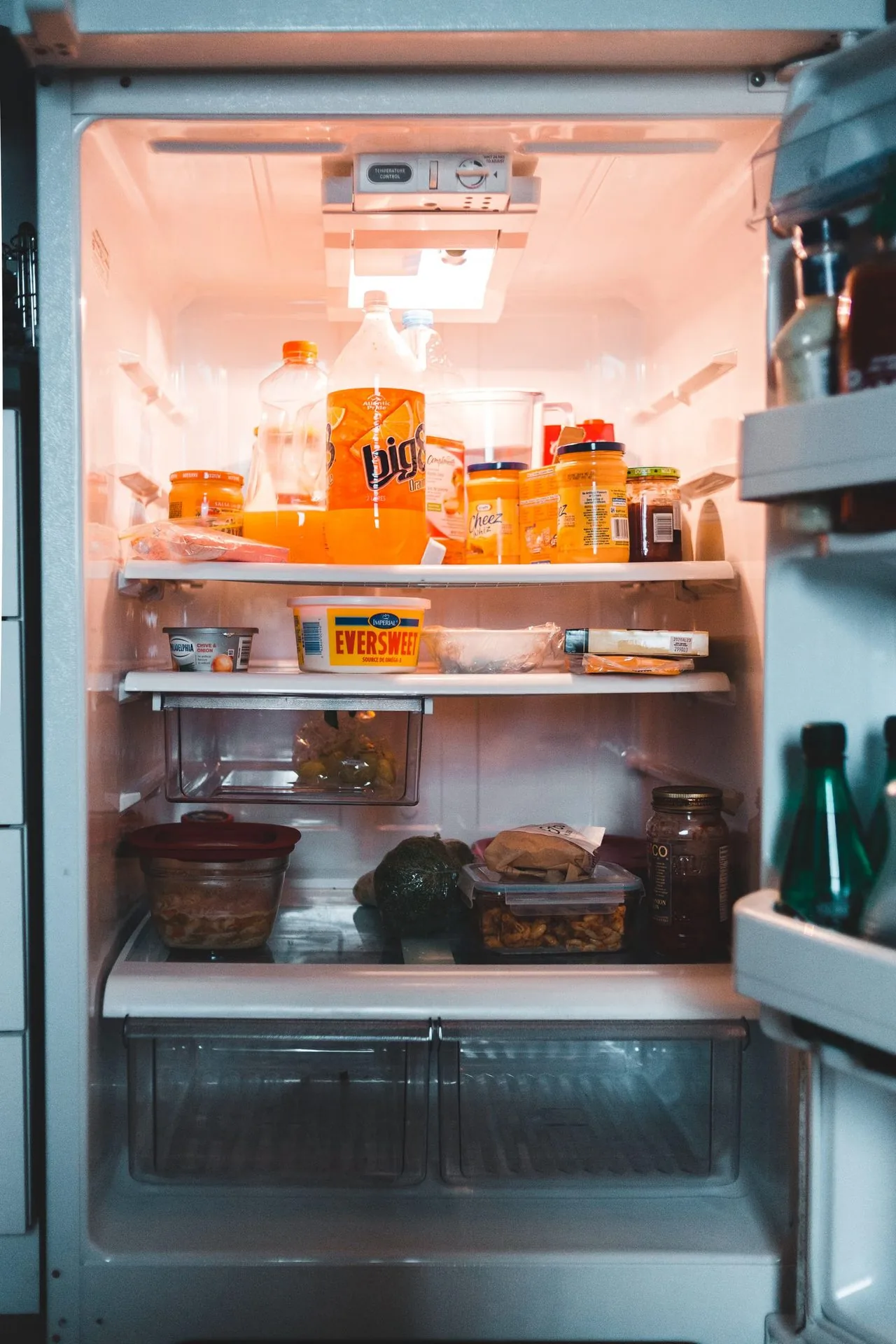
A small rental fridge makes herb storage harder in two ways: there is no spare shelf, and the door is the warmest, most changeable spot in the fridge because it opens all day. Never store herbs in the door. The back of the fridge is the steadiest, coldest spot, and the crisper drawer is the most humid — those are the two places herbs belong. If the fridge is truly tiny, skip the jar entirely: lay herbs flat in a damp towel roll, which slides into a gap a jar cannot fit.
Counter space is the other constraint, and it argues for the windowsill plant over the jar method for basil — a plant on the sill uses zero counter and zero fridge space. For the damp-towel rolls, a single designated spot in the crisper drawer keeps the system visible. Herbs you cannot see are herbs you will forget. The small fridge organization guide covers the shelf-by-shelf system that makes room for all of this, and the bulk grocery storage guide covers the same space logic for everything else that comes home in a big bag.
Fresh herbs vs. dried spices: different systems
Fresh herbs and dried spices need opposite storage. Dried spices want a cool, dark, dry place — a drawer, a cabinet, a magnetic tin — and they last for months. Fresh herbs want moisture, cold, and air, and they last for days. Keep the two systems separate: spices in the drawer, herbs in the fridge or on the sill. The spice organization guide covers the dried-spice side of the kitchen, including the "daily seven" system. One useful rule for cooking: three times as much fresh herb as dried — one teaspoon dried equals about one tablespoon fresh.
When to toss herbs
Fresh herbs are produce, so treat them with the same rules as leafy greens. The FDA recommends storing perishable produce in a clean refrigerator at 40°F or below, and keeping produce that will be eaten raw separate from raw meat, poultry, seafood, and the utensils used for those foods. Toss herbs if they are slimy, moldy, sour-smelling, or blackened from spoilage. A little wilting is recoverable — a ten-minute soak in ice water revives wilted parsley and cilantro — but slime and mold are not.
📌 Pin this for later
How to Store Fresh Herbs in a Small Rental Kitchen — save it to your "Small Kitchen Organization" board.
Frequently asked questions
How long do fresh herbs last in the fridge?
Soft herbs like cilantro, parsley, and dill last ten to fourteen days when wrapped in a damp paper towel in a sealed bag in the fridge. Hardy herbs like rosemary and thyme last two to three weeks in the crisper drawer. Basil is the exception — it blackens in the cold and should stay on the counter in a jar of water for four to six days.
Should I store basil in the fridge?
No. Basil is the one herb that should never go in the fridge — cold air blackens its leaves. Keep basil stems in a glass of water at room temperature, out of direct sunlight, and change the water every two days. A small basil plant on a sunny windowsill lasts even longer.
Can you freeze fresh herbs?
Yes, and it is the best way to save a bunch you will not use within a week. Chop herbs into an ice cube tray, cover with olive oil or water, and freeze — the cubes go straight into soups, stews, and sauces. Freeze whole sprigs of rosemary and thyme in a bag; they crumble into a pan from frozen.
Do I wash fresh herbs before storing them?
Only if they are gritty, and then dry them completely before storing — excess surface moisture invites rot. For most herbs, it is better to wait and wash right before use. Never wash produce with soap, detergent, bleach, or commercial produce wash; running water and a clean towel are enough.