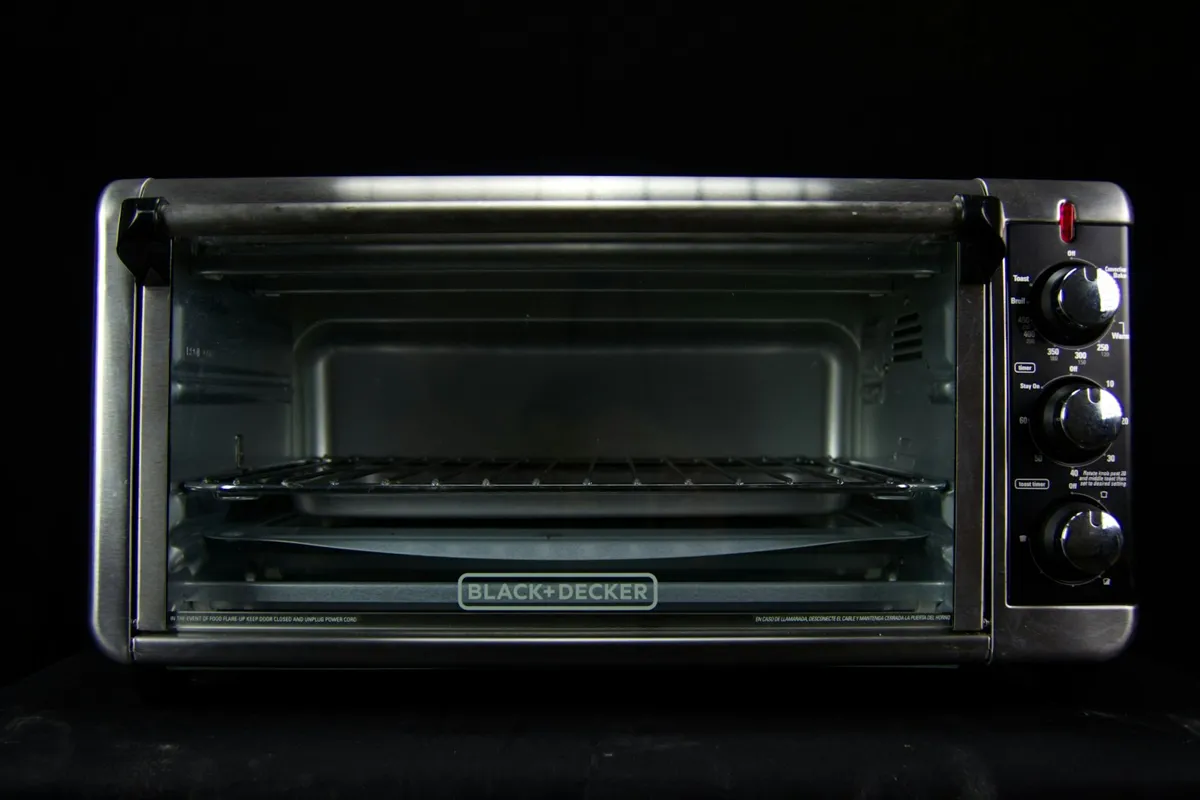
Learning how to clean a toaster oven in a small rental kitchen is a deposit skill, not a housekeeping nicety. The toaster oven almost certainly belongs to the landlord, and at move-out an inspector will open the door, pull out the crumb tray, and look at the heating elements. A toaster oven caked in burnt crumbs reads as neglect. The good news: it is one of the easiest appliances to clean well, with nothing more than dish soap, baking soda, and a damp cloth.
The whole method fits in one sentence: unplug it and let it cool, empty the crumb tray, wash the rack and pan in the sink, wipe the inside with a damp cloth, and never spray anything at the heating elements. Below: the tray, the door, the elements, how often to clean, and countertop fire safety.
The crumb tray: the 60-second job that prevents most problems
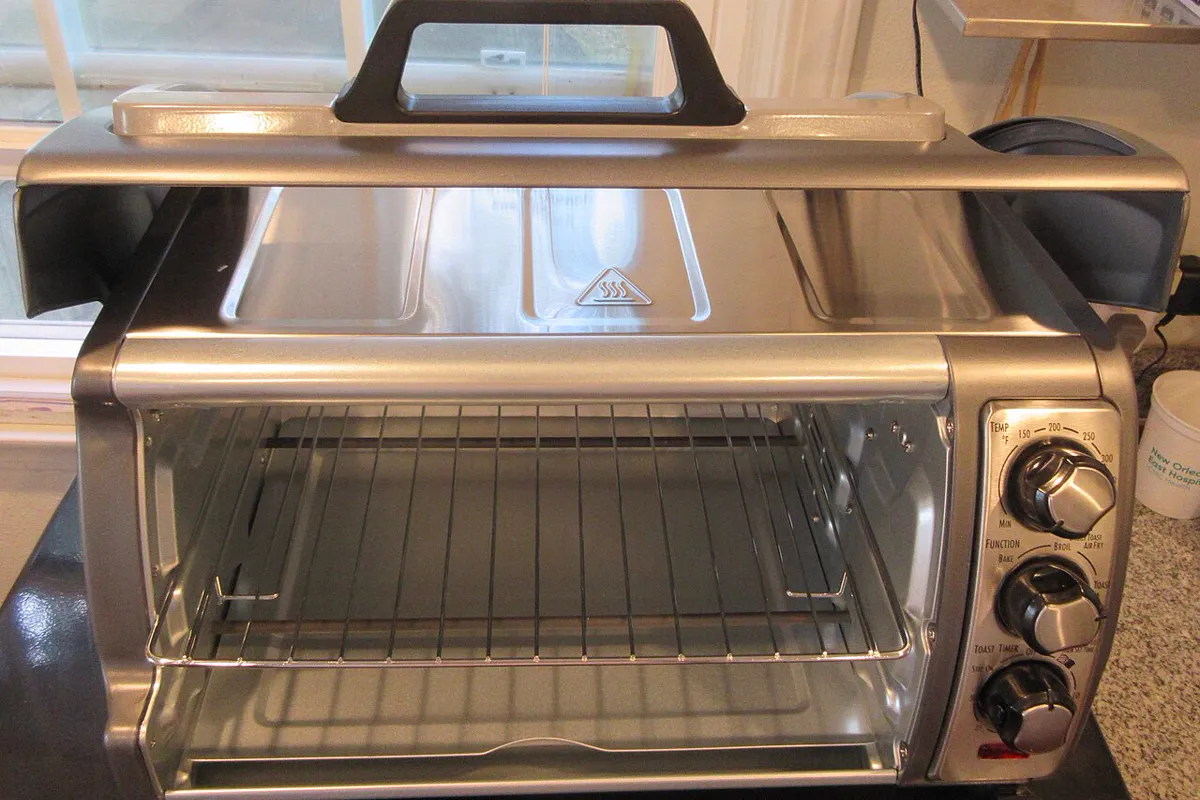
The crumb tray is the most important part of toaster oven cleaning, and the part most renters forget. It is the thin metal tray that slides out from the bottom of the oven, catching every crumb, flake of cheese, and drip of grease that falls through the rack. Left alone, those crumbs burn the next time you switch the oven on — and burnt crumbs are the main source of toaster oven smoke, smell, and, in the worst case, fire.
Pull the tray out over the sink and tip the crumbs off, then wash it in hot water with dish soap and a sponge. For baked-on grease, sprinkle baking soda over it, add a few drops of water to make a paste, leave it for ten minutes, and scrub gently. Dry it fully before sliding it back in — a wet tray left inside a closed oven can rust. If you use the oven daily, empty the tray every week and wash it every two weeks.
The rack, the pan, and the glass door
The wire rack and the baking pan are the easiest parts to clean because they come out and go in the sink. Wash them in hot soapy water like any other dish, soaking the pan for fifteen minutes first if cheese or grease has baked on. Never use steel wool or a scouring pad on a nonstick pan — it strips the coating, and a stripped pan is visible damage on a landlord-owned appliance. For a stubborn stain, spread on baking soda paste, leave it twenty minutes, and wipe it off.
The glass door collects a film of grease on the inside. Wipe it with a damp cloth and dish soap, then dry it with a microfiber cloth so it does not streak; baking soda paste works on stubborn grease too. Never use a razor blade, a scraper, or an abrasive pad on the glass — scratched glass is weaker glass, and a scratched door is cosmetic damage a landlord can charge for. While the rack and pan are out, wipe the inside walls, floor, and ceiling with a damp cloth and dish soap, working from the top down. Use the toothbrush in the corners and around the hinge, wring the cloth out well, and leave the door open for an hour so the inside dries.
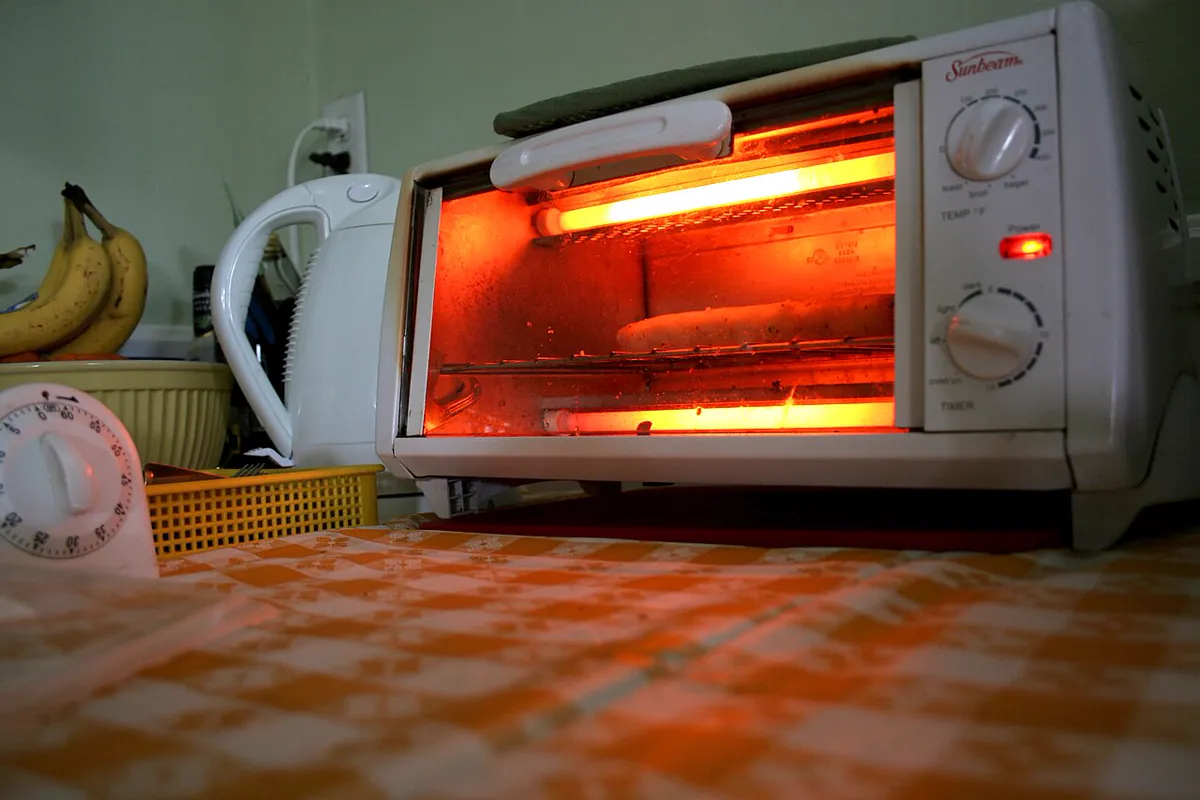
The heating elements: look, wipe gently, never spray
The heating elements are the metal tubes at the top and bottom of the oven, and they need a different approach from everything else. With the oven unplugged and cool, open the door and look at them first — small spots are normal. If food has dripped onto an element and baked on, do not scrape it off: a scratched or bent element can stop working, and a broken element is a repair, not a cleaning job.
For light residue, wipe the elements gently with a barely damp cloth, supporting each one so you do not bend it. Do not press hard, do not scrub, and do not use any cleaner on them — light residue burns off harmlessly the next time you use the oven, so run it empty for five minutes at a medium temperature with the kitchen ventilated. If an element is heavily coated, stop and tell the landlord: cleaning it aggressively is how renters break it. Never spray anything inside the oven or at the elements — a spray sends liquid behind the elements, into the control panel, and into the wiring. If you need cleaner on a surface, spray it onto the cloth, never into the oven.
What never to use inside a toaster oven
Never use oven cleaner inside a toaster oven — it is designed for full-size ovens with heavy enamel and is far too harsh for the thin interior coating, and it can damage the elements. Never use bleach inside it either, and never mix bleach with vinegar: the fumes are dangerous. Skip steel wool and abrasive powders too — a scratched coating lets food stick, lets rust start, and shows at inspection. Never submerge the oven in water or put any part of the body in the sink; only the rack, the pan, and the crumb tray are washable. And never run the oven with the crumb tray missing, or crumbs fall straight onto the bottom element and smoke. The microwave cleaning guide covers the same no-abrasive rule for another landlord-owned appliance: a scratched appliance is a deposit deduction.
A weekly cadence for daily users
If you use your toaster oven every day, you need a weekly routine, not a monthly deep clean. It takes five minutes: unplug and cool the oven, empty the crumb tray, wipe the inside walls and the glass door with a damp cloth, and put the rack and pan back. Do it on the same day every week, and the oven will never need a deep clean at all.
Once a month, go deeper: wash the rack, pan, and crumb tray in the sink, wipe the elements gently, and clean the outside — top, sides, control panel, and knobs. Every three months, check that the door closes firmly and sits level; a door that does not close properly lets heat escape and is a maintenance issue to report, not to fix yourself. Keep your supplies within reach, not buried under the sink; the microwave storage guide shows how to keep a small appliance usable in a tight kitchen.
Countertop fire-safety spacing in a small rental kitchen
A toaster oven gets hot on the outside, and in a small rental kitchen it usually sits close to the wall, the microwave, or a stack of cookbooks. That closeness is the real fire risk, and you control it with spacing, not with cleaning. Leave at least two inches of clear space on every side, and at least four inches above it. Never push it hard against the wall or under a low cabinet shelf: trapped heat can scorch the wall or the underside of a cabinet, and both are damage a landlord can charge for.
Never put anything on top of the oven while it is on, and never store anything flammable next to it — no dish towels draped over the side, no paper bags, no plastic containers, no wooden boards leaning against it. The top can melt plastic and scorch wood, and a dish towel left on a hot oven is one of the most common small-kitchen fire starters. Keep it away from the edge of the counter where a cord could be pulled, and never run it on an extension cord or a power strip if you can avoid it — a toaster oven draws a lot of power, and a cheap extension cord can overheat. Plug it directly into a wall outlet and keep the cord away from the sink. If your kitchen has only one or two outlets, the small kitchen appliance storage guide shows how to give each appliance a safe spot and a clear plug.
Move-out and inspection: the checklist
Before your final inspection, run through this short checklist. Inside: empty and wash the crumb tray, wash the rack and the pan, wipe the walls, floor, and ceiling, wipe the inside of the glass door, and gently wipe the elements. Leave the door open for an hour so the inside is fully dry — a closed, damp oven grows mold fast. Outside: wipe the top, the sides, the control panel, and the knobs, and check that the cord is undamaged. Then plug it in and confirm the elements glow, the timer works, and the door closes properly. Photograph the inside and outside after cleaning as part of your move-out record. Finally, know the line between cleaning and repair: cleaning is your job, while an element that will not heat, a timer that will not work, sparking, or a burning smell belong to the landlord — report those in writing, and unplug an oven that sparks or smells of burning the same day.
📌 Pin this for later
How to Clean a Toaster Oven in a Small Rental Kitchen — save it to your "Small Kitchen Organization" board.
Frequently asked questions
How often should I clean my toaster oven?
If you use it every day, empty the crumb tray and wipe the inside once a week — about five minutes. Wash the rack, pan, and crumb tray once a month, and the oven will never need a deep clean.
Can I spray cleaner inside a toaster oven?
No. Never spray anything inside a toaster oven or at the heating elements — liquid can reach the control panel and the wiring and damage the electronics. Spray cleaner onto the cloth instead, never into the oven.
How do I clean the heating elements of a toaster oven?
With the oven unplugged and completely cool, wipe the elements very gently with a barely damp cloth, supporting each one so you do not bend it. Do not scrub or use cleaner on them — light residue burns off the next time you use the oven. If food is heavily baked on, tell the landlord.