Microwave storage ideas for a small kitchen are the difference between a kitchen you can cook in and a kitchen where one appliance has annexed the entire counter. The average countertop microwave eats roughly four square feet of prime prep space — in a rental kitchen with maybe ten square feet of counter total, that is not an appliance, that is an occupation.
This guide covers seven renter-safe microwave storage ideas for small kitchens: rolling carts, freestanding standing shelves, the above-fridge station, baker's rack setups, ventilated cabinet nooks, corner workstation placement, and downsizing the microwave itself. Every option is deposit-safe — no drilling, no mounting into landlord walls. Plus the three safety rules that matter before you move it anywhere.
1. The Rolling Microwave Cart
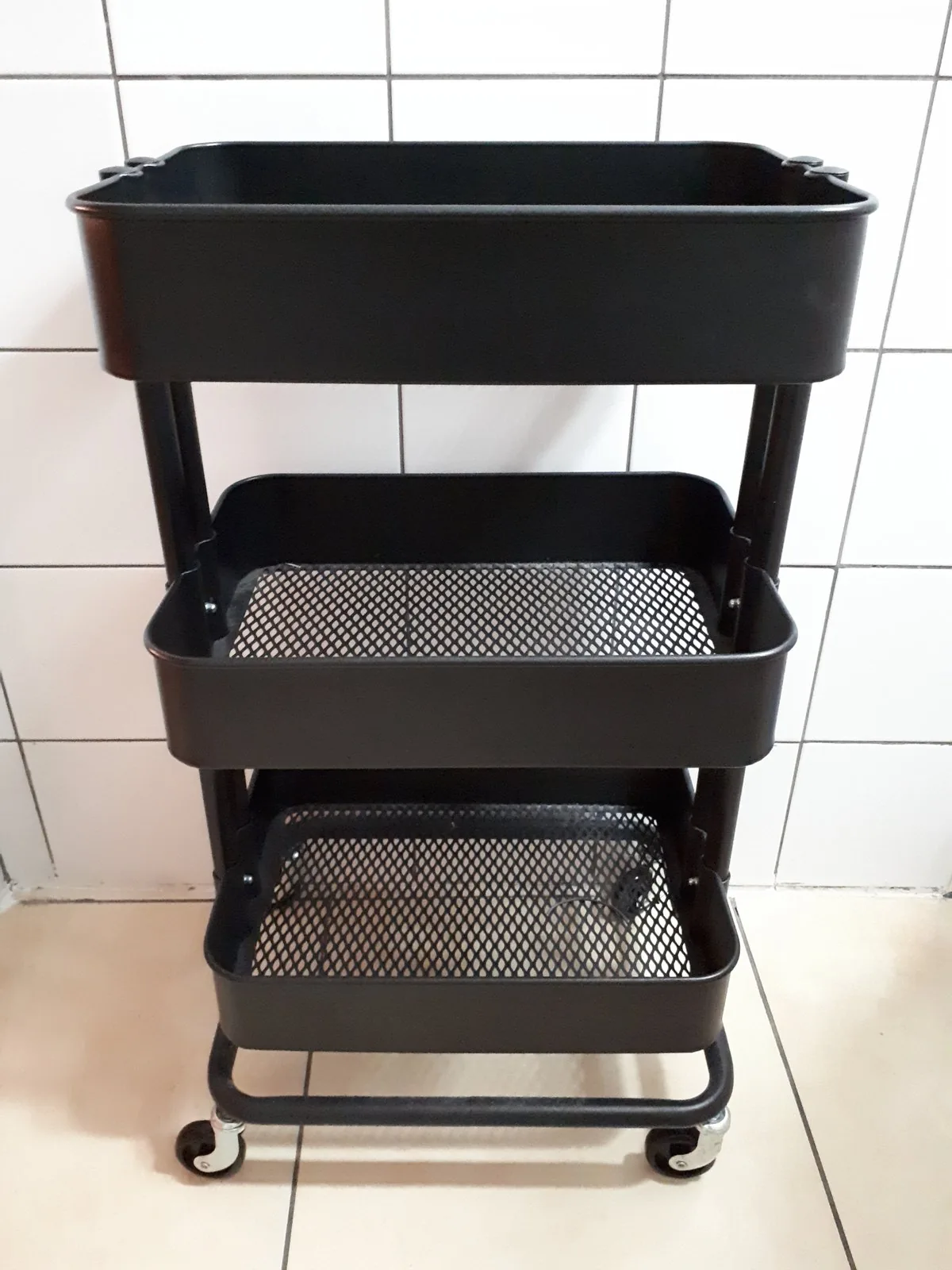
The single most renter-friendly microwave storage idea is a rolling cart with the microwave on top. A sturdy utility cart with locking wheels holds the microwave at a comfortable height, and the shelves underneath store the things that orbit it: microwave-safe bowls, paper towels, wraps and foil, the popcorn stash.
- Lock the wheels: rolling carts only work if they do not roll. Engage the brakes every time, especially before lifting anything hot out of the microwave.
- Check the weight rating: countertop microwaves typically weigh 30–50 pounds. Buy a cart rated for at least double that — a flexing shelf under a hot appliance is a bad day waiting to happen.
- Park it in a gap: between the fridge and the wall, beside the counter, or in a hall nook within a few steps of prep space. Our rolling cart guide has station setups for exactly these gaps.
- Cord discipline: plug directly into a grounded outlet — extension cords and microwaves do not mix. If the spot is far from an outlet, move the cart, not the plug.
A microwave cart doubles as a serving station when guests come over, which makes it one of the highest-value single purchases in a small rental kitchen.
2. A Freestanding Standing Shelf Unit
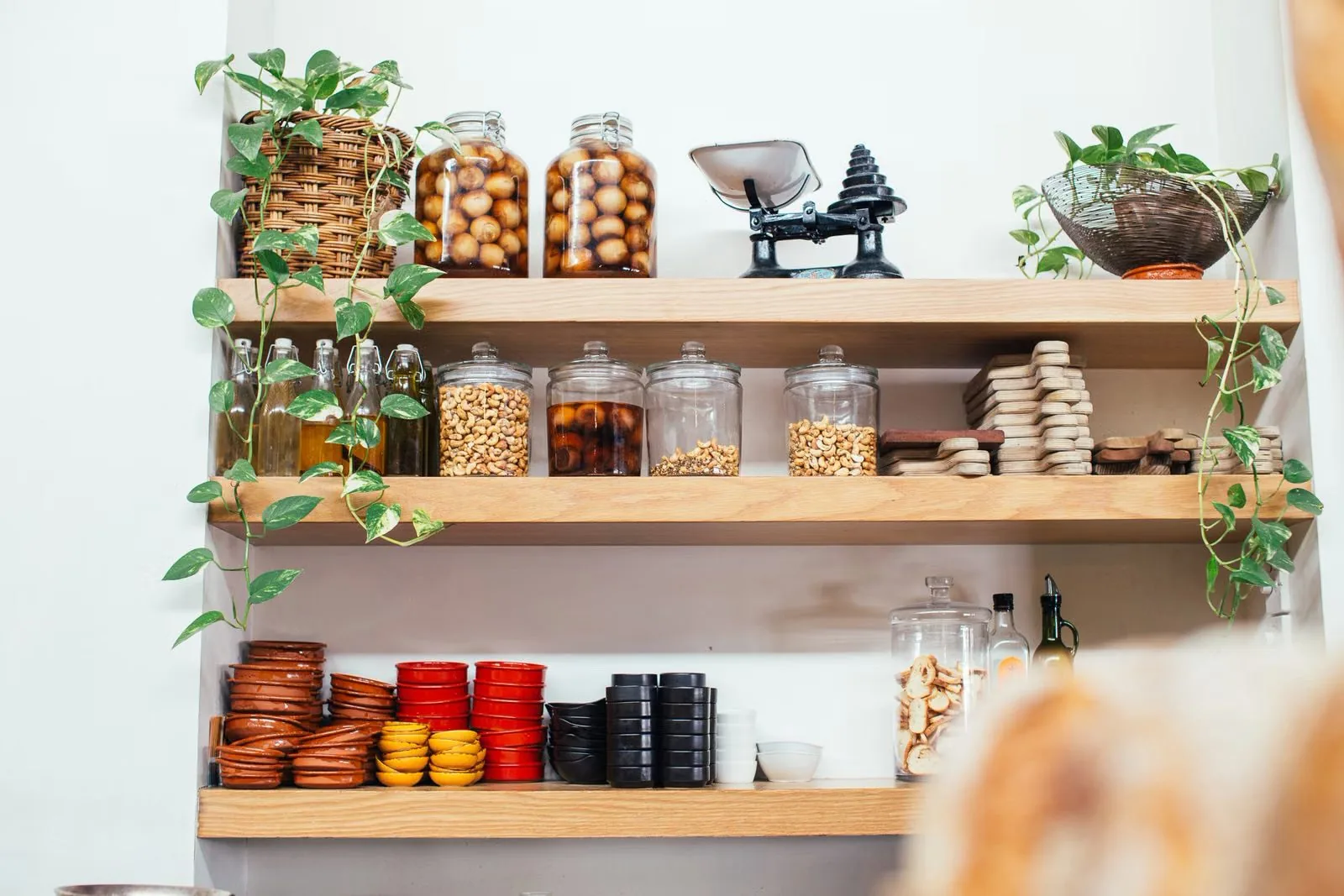
"Microwave storage ideas small kitchen standing shelves" is an exact phrase real Pinterest searchers type — and for good reason. A tall, narrow, freestanding shelf unit turns one vertical footprint into four or five storage levels, with the microwave on the shelf closest to elbow height and everything else stacked above and below.
- Microwave at elbow height: the middle shelf is the sweet spot — you can see into the bowl and lift it straight out at chest level, the safest way to handle hot food.
- Heavy on the bottom: heavy goods low, light stuff high. A top-heavy unit with a 40-pound microwave on top is a tipping hazard.
- Anchor without drilling: adhesive furniture straps on the back keep tall units from tipping and peel off cleanly at move-out.
- Leave air around it: keep shelves a few inches wider than the microwave so air circulates on all sides. A tight squeeze traps heat.
This is also the best option for a dead wall — that blank stretch between kitchen and living area. See the no-drill storage pillar for more dead-wall ideas.
3. Above the Fridge (the Right Way)
The top of the fridge is the most underused square footage in a small rental kitchen — and one of the most misused. A microwave can live up there, but only if you do it right:
- Use a tray: a sturdy tray or low-sided basket keeps the microwave from walking and protects the fridge finish.
- Mind the height: this only works if you can comfortably reach the microwave and see into it. Stretching on tiptoes to lift hot soup is an accident in a costume — pick a different spot.
- Keep vents clear: leave the manufacturer's clearance around the microwave, and never block the fridge's own vents.
- Cord path: route the cord down the back of the fridge to the outlet — never draped across the front.
The above-fridge spot pairs best with a strict fridge-zone system, since the microwave blocks the "toss it on top of the fridge" habit. Our small fridge guide has the full zoning system.
4. The Baker's Rack Station
A baker's rack — a tall, open metal rack with shelves and hooks — is the standing-shelf idea with a kitchen pedigree. Built to hold heavy things, with side hooks as a bonus, it slots into the narrow gaps that defeat wider furniture.
- Best for galley kitchens: a slim rack at the end of a galley or in a hallway alcove becomes a full station: microwave mid-shelf, dishes above, pantry overflow below.
- Hooks are free storage: hang oven mitts and a small basket for microwave covers on the side hooks. Every hook used is a drawer you do not open.
- Mind the finish: keep the rack a few feet from direct stove steam, or choose a powder-coated finish over cheap chrome that can rust.
5. The Cabinet Nook
Removing one shelf from a deep, underused cabinet creates a microwave niche that looks almost built-in — the closest a renter gets to an integrated microwave without touching the structure.
- Ventilation is non-negotiable: leave at least 3 inches of clearance on the sides and top and an inch behind. Enclosing a microwave tightly shortens its life and creates a genuine fire risk.
- Leave the door open or off: remove the cabinet door (store it in a closet, screws in a labeled bag) or keep it permanently open. A closed cabinet around a running microwave is a heat trap.
- Check the shelf rating: if the shelf bows even slightly under a test load of books, it does not get a 40-pound appliance.
6. The Corner Workstation (If It Must Stay on the Counter)
Sometimes the microwave stays on the counter — lease constraints, one outlet, whatever. The goal is then to minimize the damage:
- Push it to the back corner: corners are the least useful counter inches for prep. Tuck the microwave flush into the corner, leaving the long straight runs clear.
- Claim a landing zone: keep 12–16 inches of clear counter beside the microwave where hot bowls land. Our counter organization guide covers keeping that zone sacred.
7. Downsize the Microwave Itself
The most overlooked microwave storage idea: a smaller microwave. A 0.7 cubic-foot compact unit has roughly two-thirds the footprint of a full-size model. If you mostly reheat, defrost, and make popcorn — as most renters do — you will never miss the capacity, and you will feel the extra counter inches every day.
- Audit before you buy: track your actual usage for a week. Most people discover they use 20% of the cavity, 100% of the time.
- Retire, don't relocate: sell or donate the old one — do not store it "just in case." A spare microwave in a rental is a spare microwave in your living room. Our appliance storage guide has the keep-or-cut audit for every other appliance on your counter.
Note: Buying a new appliance is the only idea here that costs real money — and it is optional. Every other option works with the microwave you already own. Try the free moves first.
The 3 Safety Rules Before You Move It
- Ventilation clearance, always: check the manual for required clearances. Blocking the vents makes the unit run hot and, in the worst case, creates a fire risk. This rule kills more "clever" placements than any other.
- Direct to a grounded outlet: no extension cords, no power strips, no daisy-chaining. Microwaves draw serious current; thin cords overheat. No outlet at the ideal spot means the spot is not ideal.
- Stable, level, reachable: the surface must be level, sturdy under 30–50 pounds plus the jolt of a closing door, and positioned so you lift food out at or below shoulder height. Wobbly, tippy, or tiptoe-reach placements are disqualified.
Where NOT to Put It
- A sealed cabinet: even "mostly open" traps heat around a running microwave. Unless the nook has real airflow on every vent side, it is a no.
- On the counter directly above the stove: steam, grease, and range heat cook the microwave's electronics and make every reach a slick obstacle course.
- A cart in the exit path: a microwave cart in a hallway or in front of a door is a fire-safety violation of common sense, lease or no lease.
FAQ
Can you put a microwave on top of a mini fridge in a rental?
Yes, with conditions: use a sturdy tray underneath, make sure you can reach it comfortably and see inside, keep the manufacturer's ventilation clearance on all sides, and route the cord down the back to a grounded outlet. If any of those fail, use a rolling cart instead.
Can I put a microwave inside a cabinet in a rental kitchen?
Only in a ventilated nook: about 3 inches of clearance on the sides and top, an inch behind, the door removed or permanently open, and a shelf that holds 30–50 pounds without bowing. A sealed cabinet around a running microwave traps heat and is a fire risk.
What size microwave is best for a small kitchen?
A compact 0.7 cubic-foot unit is the sweet spot for most renters — roughly two-thirds the footprint of a full-size model, plenty for reheating and defrosting. If you cook full meals in it regularly, a 0.9–1.1 cubic-foot mid-size is the compromise.
Can a microwave sit on a rolling cart?
Yes — one of the best renter-safe options. Use a cart rated for at least double the microwave's weight, lock the wheels before use, plug directly into a grounded outlet, and park it near your prep area. The lower shelves become bonus storage.
Is it safe to hang a microwave under a cabinet without drilling?
There is no renter-safe adhesive shortcut for hanging a 40-pound appliance. Instead, place it on a freestanding shelf, cart, or cabinet nook at the height you want — same result, zero holes.
Pin this: The 7 renter-safe microwave spots: rolling cart, standing shelf unit, above the fridge (on a tray), baker's rack, ventilated cabinet nook, back-corner workstation, or simply a smaller microwave. Rules: keep vent clearances, plug straight into a grounded outlet, lock the wheels. Counter space: reclaimed.