A rental dishwasher is a strange appliance: you use it every day, but you do not own it, and you may not even know when it was last cleaned. Learning how to clean a dishwasher in a rental kitchen is mostly about the parts nobody sees — the filter at the bottom, the spray arms, the rubber seal around the door — because that is where food, grease, and smells build up. The good news is that a monthly clean takes about fifteen minutes of actual work, and it is the difference between dishes that come out sparkling and dishes that come out smelling faintly of old food.
The routine in this guide is simple: pull and rinse the filter, check the spray arms, wipe the door seal, then run a hot vinegar cycle and a baking-soda deodorising cycle. Nothing here requires tools you do not already have, and nothing here risks the appliance — but there are two lines a renter should not cross: never run vinegar and baking soda in the same cycle, and never try to fix a leak, a broken part, or a dishwasher that will not drain. Those are the landlord's jobs.
Start with the filter: twist, lift, and rinse
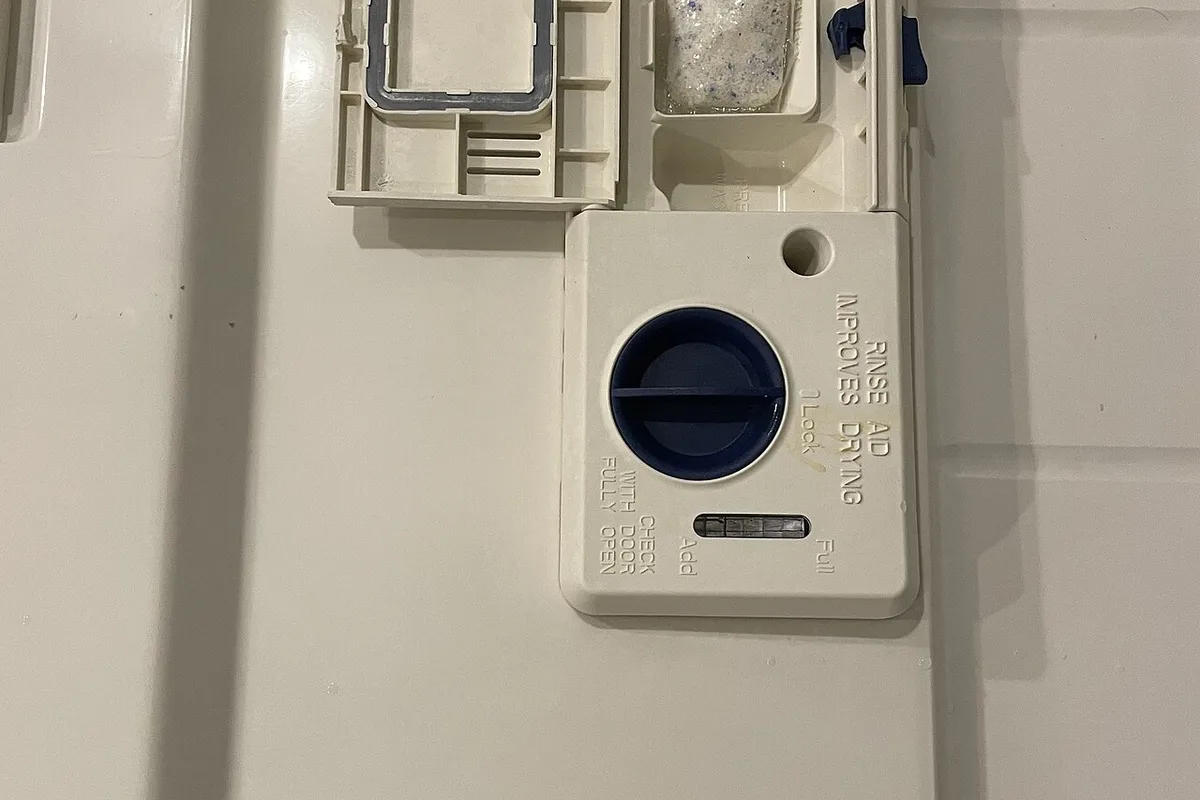
The filter sits at the bottom of the dishwasher tub, usually under the lower spray arm. Twist it counterclockwise — most filters unlock with a quarter turn — lift it out, and separate the parts if it comes apart into a coarse mesh and a fine mesh. You will probably find food particles, grease, and a grey film on the mesh; that is normal, and it is also why your dishes may have been coming out with grit on them.
Rinse the filter under hot running water and scrub it gently with an old toothbrush or a soft dish brush. For a filter that has not been cleaned in months, soak it in a bowl of hot water with a few drops of dish soap for ten minutes first, then scrub. Never use a wire brush or a scouring pad — the mesh is delicate, and a torn filter lets food straight into the pump. Put the filter back, twist it clockwise until it locks, and give it a tug to confirm it is seated — a loose filter is the most common cause of a dishwasher that suddenly drains badly.
Clear the spray arms
The spray arms are the two spinning bars — one under the top rack, one under the bottom rack — that throw water at your dishes. Their holes clog with mineral deposits and food, and a clogged hole means a whole section of dishes never gets washed properly. Pull the lower arm up and off its mount, and unclip or unscrew the upper arm, following the shape of your model rather than forcing anything.
Hold each arm up to the light and look through the holes. Clear a blocked hole with a toothpick or a straightened paper clip, pushing the debris out rather than further in, then rinse the arm under hot water and shake it — if you hear rattling, something is trapped inside, and a few firm shakes under running water usually dislodge it. If an arm is cracked or a hole is damaged, stop and tell the landlord — a replacement part is cheap for them and not yours to buy.
Wipe the door seal and the gasket
The rubber seal around the door — the gasket — is where black mould and sour smells start. Pull the seal gently away from the door edge and wipe the fold with a cloth dampened with warm water and a drop of dish soap. Work all the way around, top and bottom, and pay attention to the bottom corners, where water pools and mould grows first. For a seal with dark spots, dampen the cloth with a one-to-one mix of white vinegar and water instead, wipe, then rinse with a clean damp cloth.
Do not pull the seal hard, do not stretch it, and never use bleach on it — bleach degrades rubber over time and makes the seal brittle, which leads to leaks. Dry the seal when you finish, and leave the door cracked open for an hour so the gasket dries completely.
The monthly vinegar cycle
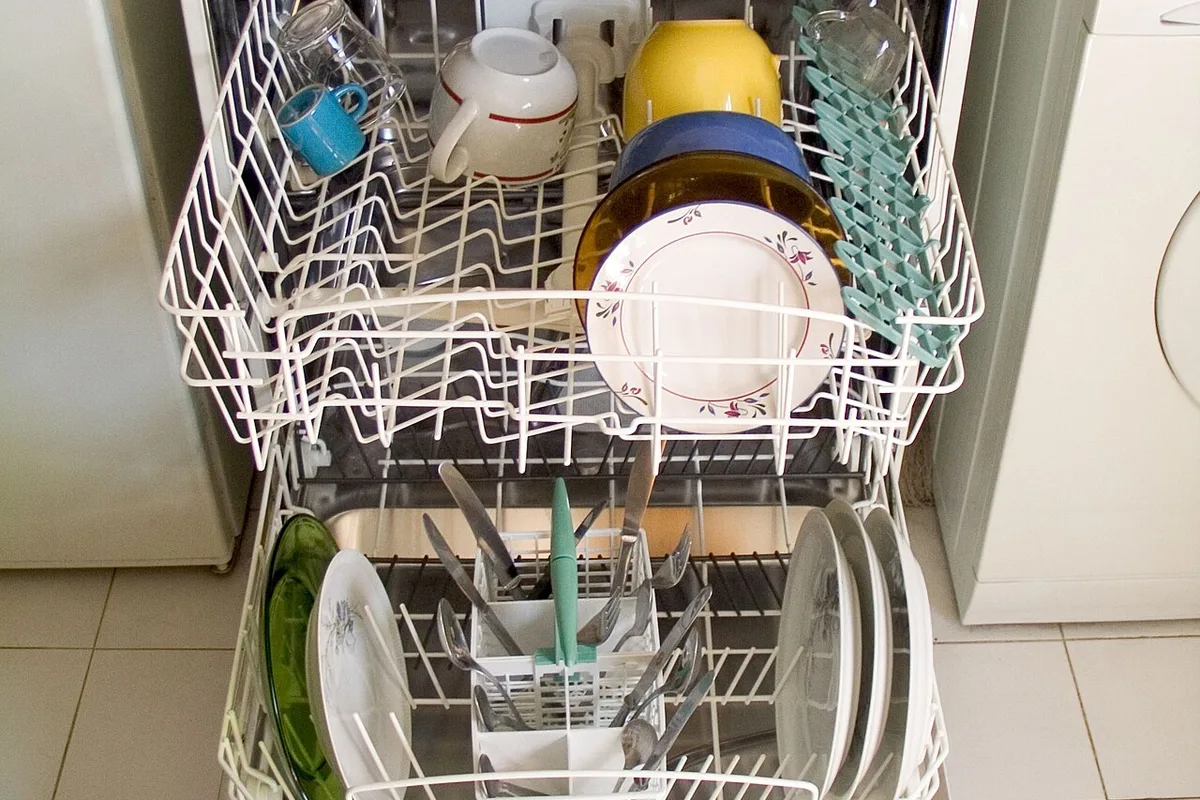
Once the filter, arms, and seal are clean, run the dishwasher empty on its hottest cycle with a cup of white vinegar. Place a dishwasher-safe cup or bowl filled with white vinegar on the top rack, close the door, and start a hot or sanitise cycle. The vinegar dissolves mineral scale and grease inside the pump, hoses, and spray arms, and it cuts the smell that builds up between deep cleans.
Two warnings matter here. First, use vinegar at most once a month — used too often, the acid wears down the rubber seals and gaskets, which is the opposite of what you want. Second, never put vinegar and baking soda in the same cycle. The two cancel each other out on contact, so you get a fizzy show and almost no cleaning, and the reaction can leave residue in the pump. Vinegar gets its own cycle; baking soda gets a separate one, described below.
The baking-soda deodorising cycle
On a different day from the vinegar cycle — or at least a separate cycle after it — sprinkle a cup of baking soda across the bottom of the empty dishwasher and run a short hot cycle. The baking soda neutralises the sour, musty smells that survive the vinegar wash, and it leaves the tub smelling fresh without any fragrance product. This is the cycle to run before a move-out inspection, because it is the one that removes the smell an inspector notices first.
If the smell comes back within a week of both cycles, the problem is usually not the tub but the filter or the seal, so go back and check those first before running more cycles. A smell that survives a clean filter, a clean seal, a vinegar cycle, and a baking-soda cycle is a drain or plumbing issue, and that is a landlord repair, not a cleaning problem. The drying dishes guide covers what to do with clean dishes while the dishwasher airs out after these cycles.
What to tell the landlord vs what to fix yourself
Cleaning is your job; repairs are the landlord's. You can clean the filter, clear the spray arms, wipe the seal, and run the vinegar and baking-soda cycles. You should not open the pump, replace a hose, swap a spray arm, or try to fix a leak, a dishwasher that will not drain, or a door that will not latch. Those are appliance repairs, and attempting them can make you liable for the damage if something goes wrong.
Report a problem in writing — email or the maintenance portal, not just a text — and describe what you already tried: "I cleaned the filter and ran a hot cycle, and the dishwasher still leaves standing water in the bottom." That sentence tells the landlord the problem is real and that you did your part, and it creates a dated record if the issue drags on. If the dishwasher breaks completely, stop using it — a second run can flood a kitchen. The under-sink storage ideas help you keep the space around the dishwasher's water connections clear, so a plumber can actually reach them when the landlord sends one.
Move-out checklist for a rental dishwasher
At move-out, the dishwasher is one of the first things an inspector opens. Give yourself an afternoon in your final week: clean the filter, clear the spray arms, wipe the seal, run the vinegar cycle, then run the baking-soda cycle on a separate day or at least a separate cycle. Leave the door cracked open overnight so the tub is completely dry, and wipe the front panel and handle with a damp cloth so there are no fingerprints or water spots.
Photograph the inside — the clean filter, the tub floor, the seal — and keep the photos with your other move-out records. If the dishwasher had a pre-existing problem, such as a stained tub or a worn seal, your move-in photos are the evidence that it was already like that, and the small kitchen declutter checklist covers the wider kitchen reset that goes with it.
📌 Pin this for later
How to Clean a Dishwasher in a Rental Kitchen (Filter, Smells, Seals) — save it to your "Small Kitchen Organization" board.
Frequently asked questions
How often should I clean a dishwasher in a rental?
Clean the filter and wipe the door seal once a month, and run a hot vinegar cycle once a month on a separate day from a baking-soda deodorising cycle. Scrape plates before loading and leave the door cracked open after each cycle.
Can I put vinegar and baking soda in the dishwasher at the same time?
No. Vinegar and baking soda cancel each other out on contact, so running them together gives you fizz and almost no cleaning, and the reaction can leave residue in the pump. Run the vinegar in its own hot cycle, then run the baking soda in a separate cycle on a different day.
Why does my dishwasher smell even after I clean it?
Check the filter and the door seal first — a dirty filter and a mouldy gasket are the most common causes. If both are clean and the smell survives a vinegar cycle and a baking-soda cycle, the problem is usually in the drain, and that is a landlord repair.
How do I clean a dishwasher filter?
Twist the filter counterclockwise at the bottom of the tub, lift it out, and rinse it under hot water, scrubbing gently with an old toothbrush. For a filter that has not been cleaned in months, soak it in hot soapy water for ten minutes first. Never use a wire brush or scouring pad, and twist the filter clockwise until it locks.
Should I fix a leaking dishwasher myself in a rental?
No. Cleaning the filter, clearing the spray arms, and wiping the seal are your job; fixing leaks, drainage problems, broken latches, or damaged parts is the landlord's. Report it in writing with a photo, and stop using the dishwasher until it is repaired — a second run can flood the kitchen.