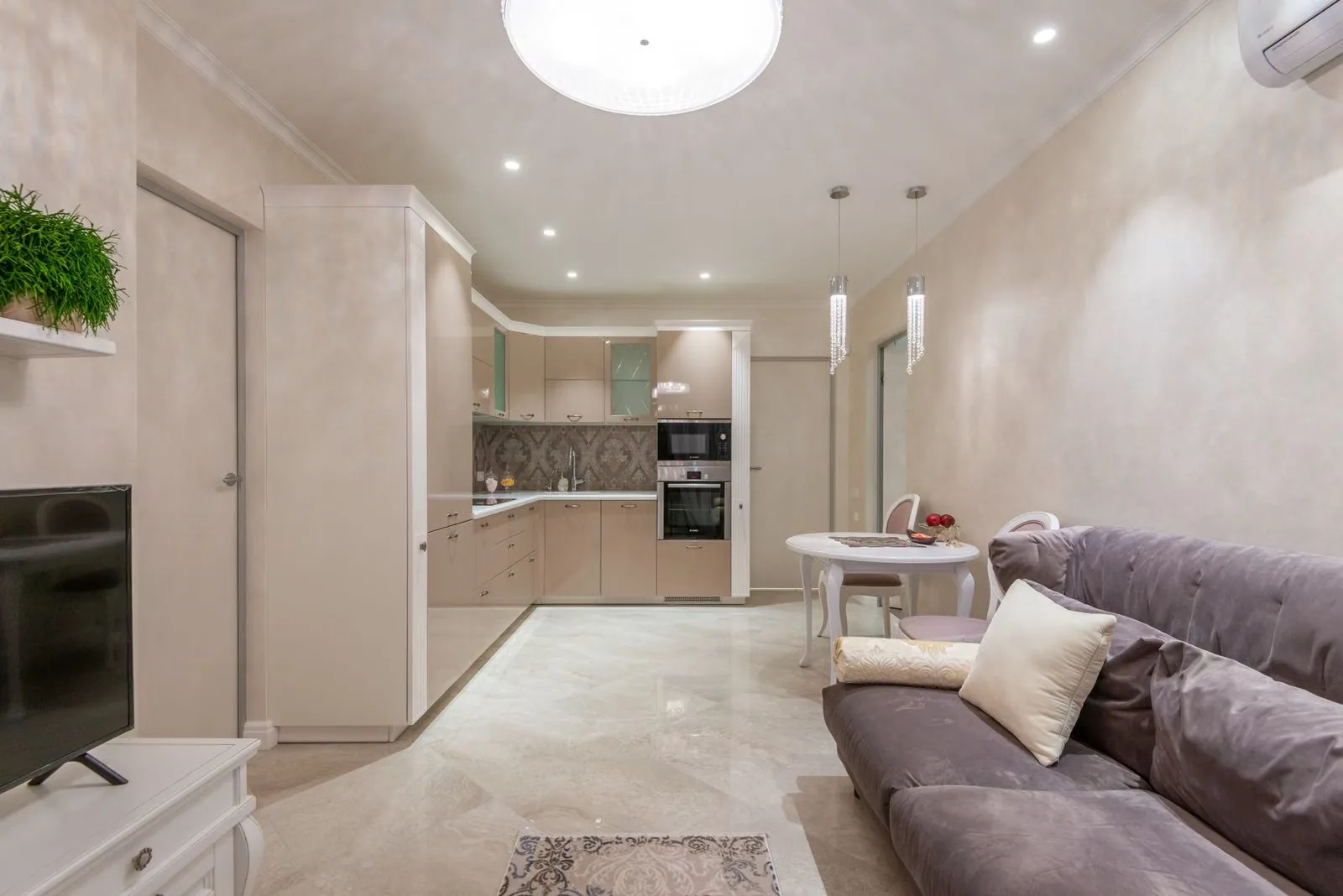
Studio apartment kitchen organization is a different game from regular small-kitchen storage: your kitchen isn't a room, it's a corner of the room you sleep, work, and host friends in. Every dish in the drying rack is part of your living room decor, and the smell of last night's fish doesn't stay in a kitchen that has no door.
This guide covers how to organize a studio apartment kitchen as a renter: zoning without walls, sight-line rules that hide the clutter, intentional open shelving, the two-person dish system, mini-fridge and pantry setups, multi-use furniture, trash and odor control for open-plan living, and the no-drill fixes that make it all work.
Zone Without Walls
In a studio, kitchen zoning is how your brain knows the workday ended and the kitchen "closed." Create the boundary with renter-safe cues:
- A rug or mat edge: a washable runner under the kitchen zone marks where cooking happens — step off it and you're home, not in the kitchen.
- Light as a divider: an adhesive LED strip or a plug-in pendant over the counter area makes the kitchen feel like its own room after dark.
- The cart wall: a rolling cart parked perpendicular to the counter creates a soft divider and doubles as a serving station when friends come over. See our rolling cart ideas for station setups.
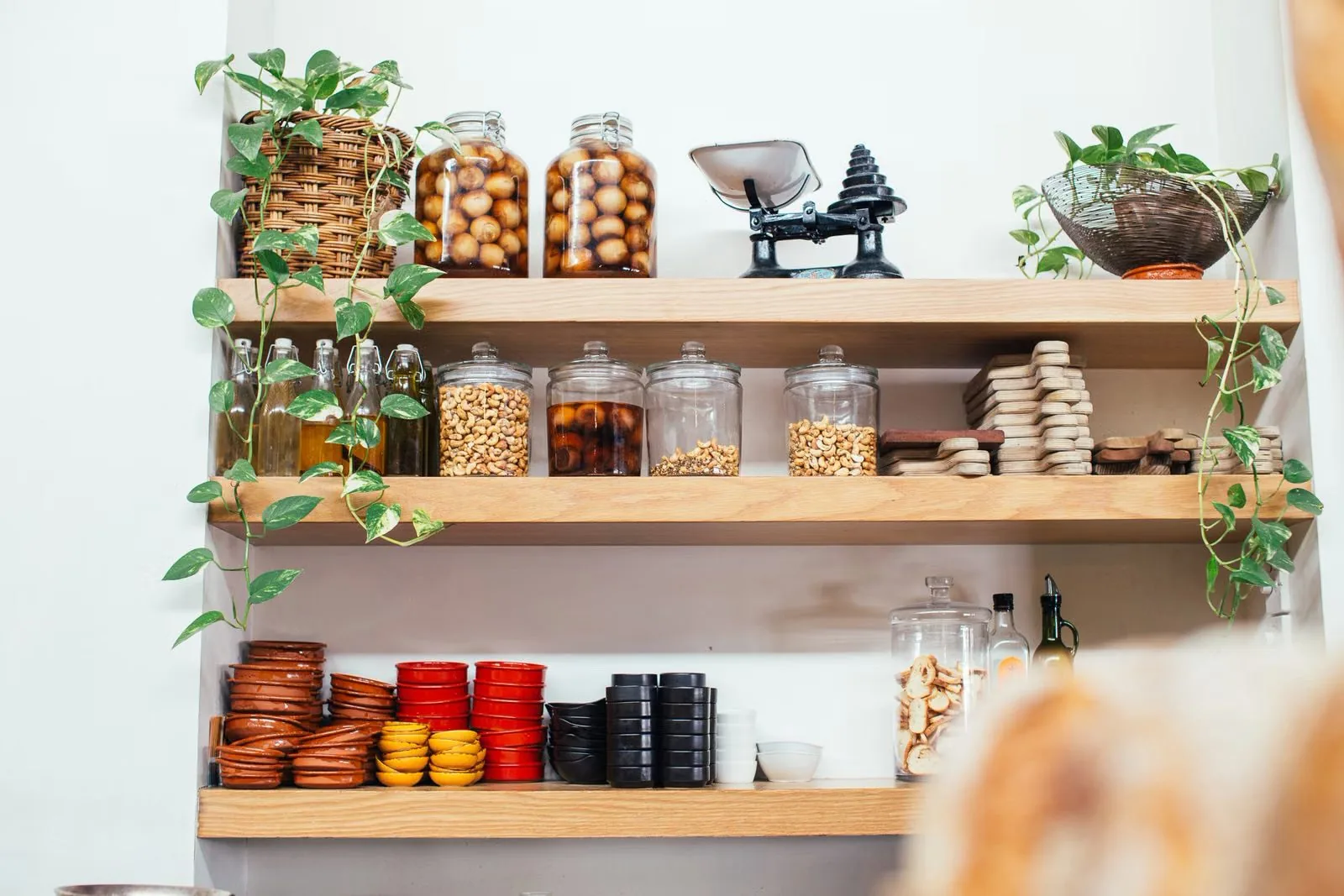
- One open shelf as the "menu board": the shelf facing the living area holds only the pretty stuff — matching jars, a plant, cookbooks. The working storage faces the cook.
Zones aren't about square footage — they're about the feeling that the kitchen has edges. Even a studio kitchenette reads as intentional when it has a boundary.
The Sight-Line Rule
Sit on your couch (or bed — be honest) and look at the kitchen. Whatever you can see from there is your living room, so the sight-line rule decides what hides:
- Eye-level and above, facing the room: must look good. This is where matching containers, folded linens, and the pretty shelf live.
- Below counter and inside cabinets: can be pure function. Bins, decanted goods, and the honest chaos stay behind doors.
- The dish rack: the number-one sight-line offender. Switch to a compact over-the-sink rack or a roll-up drying mat that disappears into a drawer when dishes are done.
- Trash: never visible from the couch. A slim can inside a cabinet, behind a cart curtain, or in the appliance-gap slot — never freestanding in the sight line. Our trash can guide has the full hiding playbook.
Take a phone photo from your couch once a month. The camera catches the clutter your eyes have learned to ignore — the pile of mail on the counter edge, the dish soap lineup, the open trash bag.
Open Shelving That Looks Intentional
Studios usually mean few or no upper cabinets, so open storage has to carry the kitchen — and look like a choice, not a compromise:
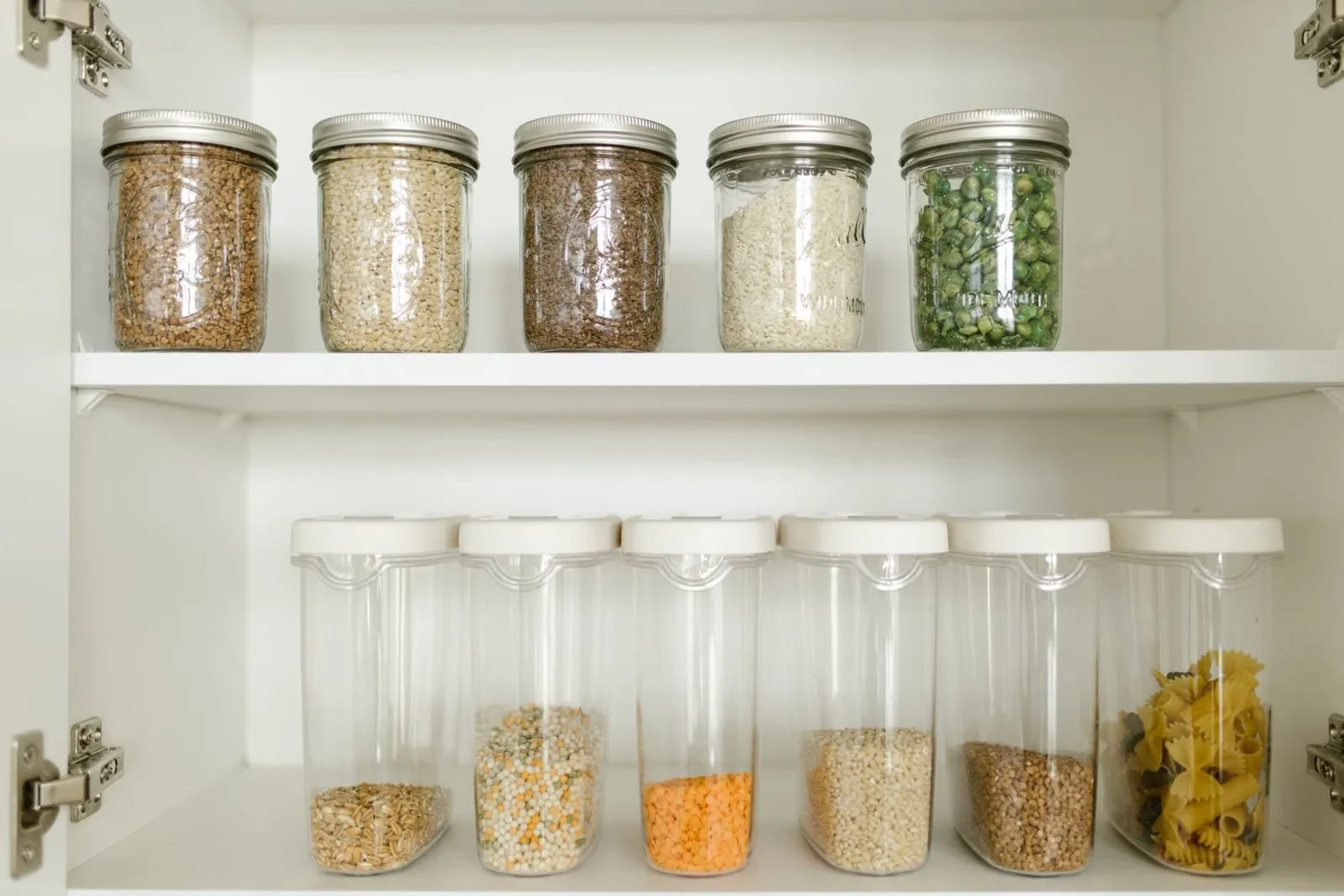
- The uniform rule: decant dry goods into matching jars or containers. Five mismatched boxes look like clutter; five identical jars look like a design decision. This is the single highest-impact studio kitchen move.
- The 70/30 shelf: 70% working storage (dishes, daily jars), 30% breathing room or one pretty object. Crammed shelves read as mess from across the room.
- No-drill shelf options: freestanding shelf units, over-the-counter risers, and heavy-duty adhesive shelves hold everyday items with zero holes. Stackable risers double one shelf's capacity.
- Group by color: when everything matches loosely by color family, open storage looks curated even when it's just Tuesday's dishes.
The Two-Person Dish System
A studio kitchen serves one or two people — so stop storing dishes for six. The minimal dish system cuts washing, drying-rack clutter, and cabinet demand at once:
- Four of each, max: four plates, four bowls, four glasses, four mugs. Enough for you plus guests, small enough that nothing piles up for days.
- One cutting board, two good knives: stored on a magnetic strip or in a drawer — never a countertop block that eats the prep zone. (See our magnetic storage guide for no-drill knife storage.)
- The wash-as-you-go rule: with only four plates, "soak it for later" stops being an option — and the sink stays clear because there's nowhere for a pile to hide.
- Donate the rest: the chipped mugs, the souvenir glasses, the fifth mixing bowl. They were the clutter.
If you host often, keep a separate lidded bin of "party dishes" in a closet — they visit the kitchen for dinner parties and go home after. Daily life stays at four.
Mini Fridge and Small Pantry Setup
Many studios come with an apartment-size fridge and zero pantry. The system:
- Fridge zones, strict: a mini fridge has no room for "I'll find a spot." Assign every shelf a job — drinks, dairy, produce, leftovers — and use small bins so items can't migrate. Our small fridge guide has the full zoning system.
- The pantry cart: a slim rolling cart or narrow shelving unit becomes the pantry — dry goods decanted into matching containers, ordered by frequency. Park it in the kitchen zone or a hall nook.
- Top-of-fridge real estate: a tray or basket on top of the fridge holds the bread, the fruit bowl, or the snack bin — prime studio storage that most people waste.
- Buy smaller, shop more: the studio pantry strategy is a weekly shop, not a Costco run. Less stored food means less storage needed, and fresher food too.
Note: Skip bulk buying in a studio unless you have a true overflow spot (hall closet shelf, under-bed bin). A 24-pack of paper towels has to live somewhere, and that somewhere is usually your living room.
Multi-Use Furniture for the Kitchen Zone
In a studio, every kitchen object should do at least two jobs:
- Fold-down or drop-leaf table: dining table by night, desk or prep extension by day, flat against the wall when you need floor space.
- The rolling cart as island: prep surface, pantry shelf, and serving station in one — roll it to the counter to cook, to the couch to serve. Lock the wheels when chopping.
- Storage ottoman or bench: seating with a lid — small appliances, party dishes, or the table linens live inside.
- A sturdy step stool that doubles as a side table: you need the height for high shelves anyway; make it earn its floor space the other 23 hours.
Trash, Odor, and Sound Control
Open-plan living amplifies everything the kitchen produces. The studio survival trio:
- Trash: small lidded can, emptied often — in a studio, yesterday's trash smell is this morning's living room. The freezer trick (freeze food scraps until trash day) is made for studio life.
- Cooking odors: run the range hood or a window fan every time you cook, not just for fish. Simmer a pot of water with lemon slices or vinegar after strong-smelling meals — it resets the whole studio. Keep the bedroom door (if you have one) closed while cooking.
- Sound: a rubber mat under the dish rack, felt pads on cabinet doors, and a soft-close habit keep 6 AM breakfast from being a roommate-or-neighbor event. Blend and run the dishwasher (if you have one) at sociable hours.
The nightly 10-minute reset is non-negotiable in a studio: dishes done, counters wiped, trash checked, cart parked. Waking up to a clean kitchen-corner changes how the whole apartment feels — our counter organization guide includes the 2-minute version.
Keep It Pretty on Purpose
The final studio secret: because the kitchen is always visible, five minutes of styling beats an hour of deep organizing. Matching soap dispensers instead of branded bottles, a small plant on the shelf, linens folded the same way, the cart's skirt straightened — these tiny consistencies are what make guests say "your studio is so cute" instead of "where's your kitchen?"
Start with the pillar systems — 15 renter-friendly storage ideas covers the no-drill foundations — then layer the studio-specific rules on top: zone it, hide the sight lines, shrink the dish collection, and reset it nightly.
Pin this: The studio kitchen formula: zone it with a rug + light, hide everything below the sight line, 4 dishes max per person, pantry on a rolling cart, trash emptied daily, and a 10-minute nightly reset. Small space, zero kitchen shame.
FAQ
How do you organize a kitchen in a studio apartment?
Zone the kitchen area with a rug or lighting so it feels separate, apply the sight-line rule (anything visible from the couch must look intentional), keep only 4 dishes per person, use a rolling cart as a pantry-island, and run a 10-minute nightly reset. Matching containers on open shelves make the biggest visual difference.
How can I hide my kitchen in a studio apartment?
Use a rolling cart or open shelf as a soft divider, keep clutter below counter sight lines, hide the trash can inside a cabinet, use a curtain on open storage, and keep only matching containers visible on shelves. A fold-down table also removes the "dining room in the bedroom" feeling.
Where do you put a pantry in a studio apartment?
A slim rolling cart or narrow freestanding shelf becomes the pantry — decant dry goods into matching containers and park it in the kitchen zone or a hall nook. The top of the fridge and a closet shelf work as overflow for bulk items.
How do I keep cooking smells out of my studio?
Run the range hood or a window fan every time you cook, close the bedroom door while cooking, and simmer lemon water afterward to reset the air. Take food trash out daily or freeze scraps until trash day — in open-plan living, odor control is daily, not weekly.
How many dishes should I keep in a studio apartment?
Four of each core item (plates, bowls, glasses, mugs) for one or two people is the sweet spot — enough for daily life plus guests, few enough that nothing piles up. Store extra "party dishes" in a closet bin for hosting.