Learning how to clean a rice cooker in a small rental kitchen is a deposit skill, not a housekeeping nicety. The rice cooker may be yours or the landlord's, but either way it shows neglect fast: a starchy film builds up in the pot, the steam vent clogs, the lid starts to smell, and soon every batch tastes faintly of the last one. The good news: it is one of the easiest appliances to clean well, with only dish soap, vinegar, and a soft cloth.
The whole method fits in one sentence: wash the inner pot and lid in the sink, wipe the heating plate and sensor with a damp cloth, clean the steam vent and the condensation collector, and dry everything fully before you put it away. Below: the starch film, the forgotten parts, smells, and small-sink washing.
The inner pot: starch film and the nonstick rule
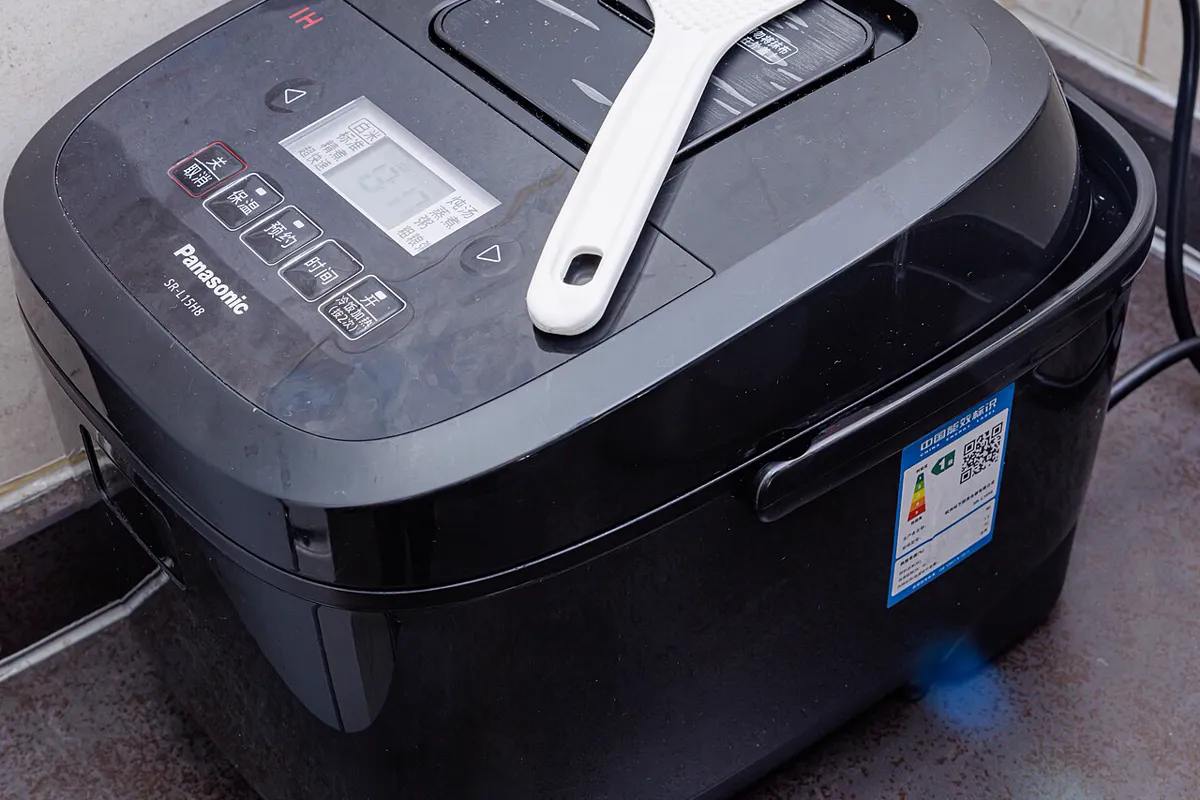
The inner pot is where most of the cleaning happens, and where most renters cause damage. After cooking, a thin film of starch coats the inside, and if it dries it turns into a hard, cloudy layer that makes rice stick and burn. The fix: as soon as the pot is cool enough to handle, fill it with hot soapy water and leave it to soak for ten to fifteen minutes, then wipe it with a soft sponge. Never let a starchy pot sit dry overnight.
The one rule that matters most: never use anything abrasive on a nonstick inner pot — no scouring pads, no steel wool, no abrasive powders. The coating is thin, and once it is scratched, rice sticks and burns, and the pot is ruined: a replacement cost on a landlord-owned cooker, not a cleaning job. Use a soft sponge only, and let soaking do the scrubbing. If burnt rice will not come off after a soak, fill the pot with hot water and a tablespoon of vinegar for another thirty minutes. Stainless pots can take a little more scrubbing, but still skip steel wool. Rinse well and dry the pot fully before putting it away.
The steam vent and the condensation collector
The steam vent and the condensation collector are the two parts almost every renter forgets, and the two that cause the most smell. The vent is the small cap or hole in the lid where steam escapes; over time it clogs with starch, and a clogged vent can make the cooker splutter, overflow, or cook unevenly.
On most cookers the steam vent cap pops or twists off. Take it off and wash it in hot soapy water, using an old toothbrush to clear the small holes and channels. If your model has a fixed vent, wipe around it and clear the holes from the outside. Never poke a knife or a skewer into the vent — a damaged valve is a repair, not a cleaning job. Wash the vent cap every time you deep-clean.
The condensation collector is the small plastic cup or tray that catches water dripping off the lid. It fills with starchy, slightly sour water every time you cook, and if you never empty it, it becomes a stagnant pool that smells bad and grows mold. Pull it out, tip the water away, wash it in hot soapy water, and dry it before sliding it back in. Empty it after every cook — it takes five seconds, and it is the single best habit for keeping a rice cooker smell-free. If your model has no collector, wipe the rim where the lid meets the body after every cook.
The heating plate and the sensor: wipe, never submerge
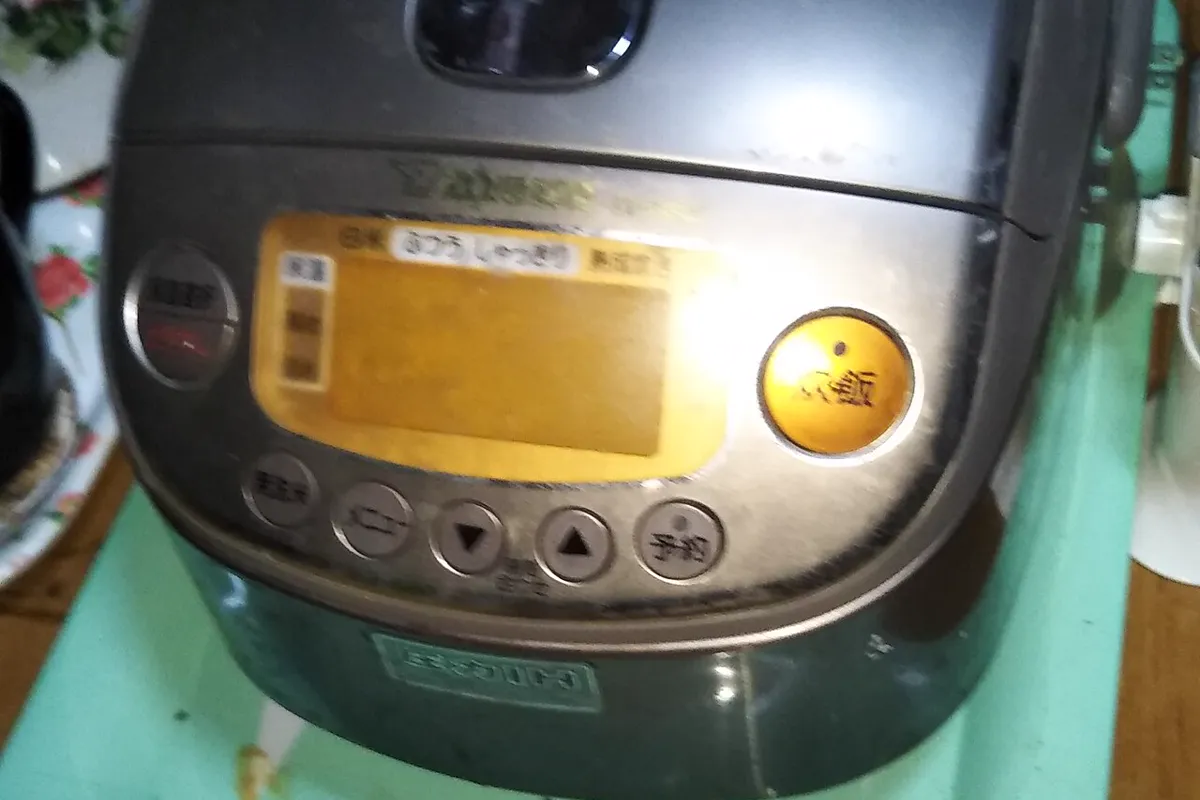
The heating plate is the round metal disc at the bottom of the cooker body that the inner pot sits on, and the sensor is the small button in its center that tells the cooker when the rice is done. They must never get wet. Never submerge the base, never put it in the dishwasher, and never run water over the plate. Water inside the base can reach the wiring and the thermostat, and that is how a rice cooker dies, or becomes a safety hazard.
To clean the plate, unplug the cooker and make sure it is completely cool. Wipe it with a barely damp cloth — wring it out well first — and dry it straight away with a second cloth. For a starchy ring or a burnt spot, dampen the cloth with a little vinegar. Wipe the sensor button the same way, pressing it gently; if it is stuck down, stop — that is a repair, and forcing it can break the thermostat. Check the plate before every cook: a grain of rice sitting on it will burn the next time the cooker runs. And always dry the outside of the inner pot before you set it on the plate.
The lid, the gasket, and smells that will not go away
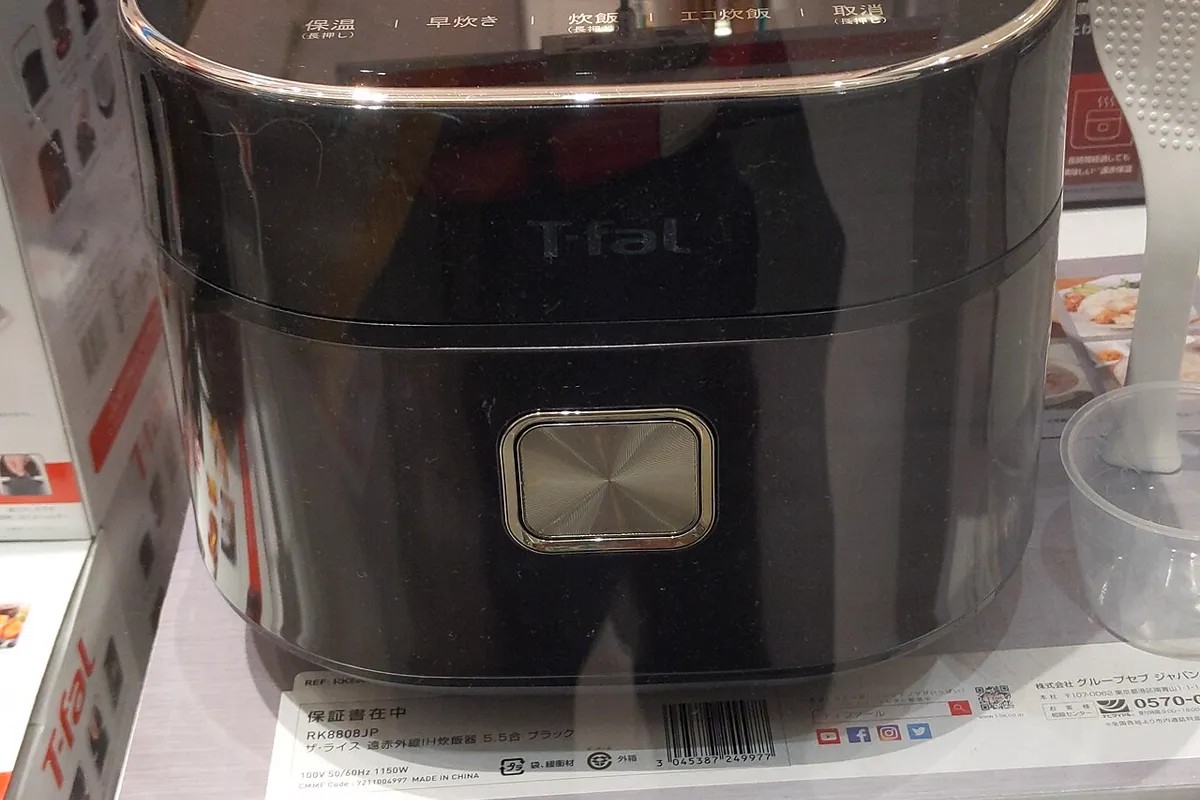
The lid is where smells live. Steam rises into it every time you cook, and starchy moisture settles into the inner surface, the gasket, and any removable inner lid plate. If your cooker has a removable inner lid, wash it in hot soapy water every time you deep-clean; if it is fixed, wipe it with a damp cloth and dish soap.
The gasket is the rubber or silicone ring around the edge of the lid, and it traps odors most. Wipe it with a damp cloth and dish soap, working all the way around, then dry it. If it smells stale, wipe it with a cloth soaked in one part vinegar to three parts water, then wipe again with a clean damp cloth. Never pull it out or stretch it — a gasket that no longer seals lets steam escape. If it is cracked, warped, or coming loose, report it to the landlord; do not try to glue it back yourself.
For smells that survive a proper wash, run a descale cycle. Fill the inner pot halfway with water, add two tablespoons of white vinegar or a teaspoon of citric acid, and run a normal rice cycle with the lid on. When it finishes, unplug the cooker, let the water cool, tip it away, and wash the pot, lid, and vent cap again. The hot acidic steam reaches every surface the cloth cannot — vent channels, gasket, inside of the lid — and strips the stale smell out. Do this once a month if you cook rice often, and after any strongly flavored cook.
Small-sink washing and drying in a small kitchen
A rental kitchen usually has a small sink, and a rice cooker pot is wide enough to make washing awkward — so wash it in stages, not all at once under the tap. Soak it first — fill it with hot soapy water and leave it on the counter while you eat. Then wash it with a sponge, tipping the water out and rinsing in sections. If the pot will not fit in the sink at all, wash it in a large bowl or tub on the counter, and rinse it with a jug of clean water.
Drying matters as much as washing, and more in a small kitchen with nowhere to leave things out. A rice cooker put away damp will smell musty within a day, and the smell transfers into the next batch. Dry the pot, lid, vent cap, and collector with a towel, and leave the cooker open for an hour so the body can air out. If you have no counter space to leave it open, stand the lid and the pot on a dish rack — the drying dishes with no counter space guide shows how to dry bulky items with no room to leave them out. Reassemble only when everything is fully dry, and store it with the lid slightly ajar, so air can circulate.
How often to clean, and what to do when it is not cleaning
If you cook rice most days, wipe the heating plate and empty the collector after every cook, wash the pot and lid after every cook, and deep-clean — vent cap, gasket, descale — once a month. If you cook rice a few times a week, the deep clean can wait six weeks. Once a month, wipe the outside and the control panel — spray cleaner onto the cloth, never onto the panel — and check the cord. Keep the cooker level, with the vent pointing away from the wall. The small kitchen appliance storage guide shows how to give each appliance a safe spot in a tight kitchen.
Finally, know the line between cleaning and repair: cleaning is your job; a plate that will not heat, a sensor that stays stuck down, a cooker that trips the power, sparking, or a burning smell belong to the landlord. Report those in writing, and unplug a cooker that sparks or smells of burning the same day. For the same judgment on another appliance, the air fryer cleaning guide covers it.
📌 Pin this for later
How to Clean a Rice Cooker in a Small Rental Kitchen — save it to your "Small Kitchen Organization" board.
Frequently asked questions
Can I put a rice cooker in the dishwasher?
No — never put the base of a rice cooker in the dishwasher, and never submerge it in water. Water inside the base can damage the electronics or create a safety hazard. Only the pot, lid parts, vent cap, and collector are washable, and only by hand.
How do I get the smell out of my rice cooker?
First wash the inner pot, the lid, the gasket, and the steam vent cap in hot soapy water. Then run a descale cycle: fill the pot halfway with water, add two tablespoons of vinegar or a teaspoon of citric acid, and run a normal cycle. Tip it away and wash everything again.
How do I clean the steam vent on a rice cooker?
On most models the vent cap pops or twists off — take it off and wash it in hot soapy water, using an old toothbrush on the small holes. If your model has a fixed vent, clear the holes from the outside. Never poke a knife or a skewer into the vent.